


 08 January,2026

Table of Contents
Expert Note: Over the last 8+ years, I’ve helped US college students from community colleges to Ivy League universities manage last-minute academic deadlines without risking plagiarism or GPA loss. This 24-hour plan is not just a theory—it’s a tactical system used by successful students at universities from Ivy Leagues to State colleges to maintain their GPA under pressure.
It is 7:00 PM. Your assignment is due tomorrow morning. You have a 2000-word assignment to complete, and your heart is racing. In the US, college life moves fast. Between work, classes, and your social life, it is easy to let a big project slip.
But a 2000-word assignment is not a mountain. It is just a set of tasks. If you follow this guide, you can finish your work by sunrise and improve your chances of submitting a complete, passable assignment. Here is your 24-hour assignment plan to beat the clock.
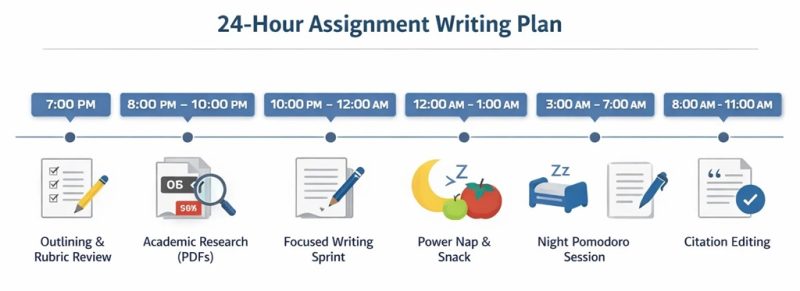
This schedule helps you manage your 24 hours. It moves you from a blank page to a finished project using fast academic writing steps.
| Time Block | Phase | Goal / Word Count Target |
|---|---|---|
| 07:00 PM – 08:00 PM | The Skeleton | Outline the assignment and check the rubric. |
| 08:00 PM – 10:00 PM | Surgical Research | Find 8 sources and copy quotes into a “Dump Doc.” |
| 10:00 PM – 01:00 AM | The First Sprint | Write the first 800 words (Introduction + Task 1). |
| 01:00 AM – 02:00 AM | Refuel & Reset | Eat a protein snack and take a 20-minute power nap. |
| 02:00 AM – 06:00 AM | The Midnight Push | Use Pomodoro to write 800 more words (Tasks 2 & 3). |
| 06:00 AM – 09:00 AM | Emergency Sleep | Get 3 hours of real rest to stay sharp for editing. |
| 09:00 AM – 11:00 AM | The Final 400 | Write the Conclusion and add examples to hit 2,000 words. |
| 11:00 AM – 01:00 PM | The Final Polish | Fix citations, run a grammar check, and submit. |
If 24 hours feels too short, let our experts take the pressure off.
Don’t just start typing. If you don’t have a plan, you will waste hours. To succeed, you must manage your time like a pro. Spend your first hour (Hour 1) organizing your thoughts into a map.
Breaking your 2000 words into “bite-sized” pieces is the best way to start beating procrastination. Aim for these targets:
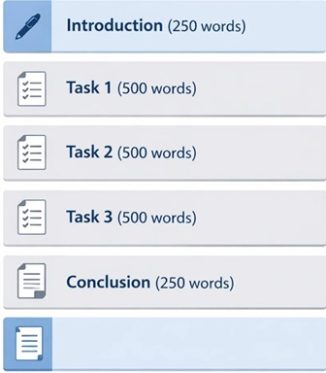
Check the Rubric: From my experience as a student coach, I’ve seen students fail because they missed one “Required Section.” Look at the grading sheet from your professor first. If “Data Analysis” is worth more points, spend more time there.
You do not have time to read 100 pages of notes during Hours 2–3. You need to find “proof” fast. For more detailed strategies on gathering info quickly, check out these last-minute assignment writing tips.
Use Google Scholar. Search for your topic and add filetype:pdf to the end. This finds real academic papers fast. Open a paper and press Ctrl+F. Type in your main keywords. Copy 10 good quotes into a blank page. This provides last-minute assignment help for your brain because you are no longer starting from zero.
Finding credible academic proof takes time you don’t have. We can help you find sources and draft your arguments in half the time.
Now, it is time to work (Hours 4–8). Turn your phone off and put it in another room. This is the core stage where you actually complete a 2000-word assignment in one night.
Set a timer for 25 minutes. Write as fast as you can. Do not stop to fix spelling. When the timer dings, take a 5-minute break. This is the Pomodoro technique for students, and it keeps your brain fresh.
Why this works: Short, timed writing sprints are backed by cognitive science, which shows that focused intervals reduce mental fatigue and improve output under pressure.
Write simple sentences. Clear writing is easier to grade and much faster to produce.

By Hour 9, you will feel exhausted. This is the danger zone. Knowing how to write an assignment when you’re tired means knowing when to stop for a moment.
Don’t risk your GPA because of exhaustion. Our team works around the clock to help you cross the finish line.
You are almost there (Hours 10–12)! You likely have 1200 words. Now you need to reach the finish line by filling the gaps.
If you need more words, add examples. Talk about a real company like Apple or Amazon. This adds words easily and makes your work look better. This is also an easy way to cite sources of real-world info. For the conclusion, remind the reader what you told them and why it matters for the future.
It is 5:00 AM (Hours 13–14). You are done writing, but you are not done with the assignment. You need a final review to ensure you get the best assignment writing help from your own editing.
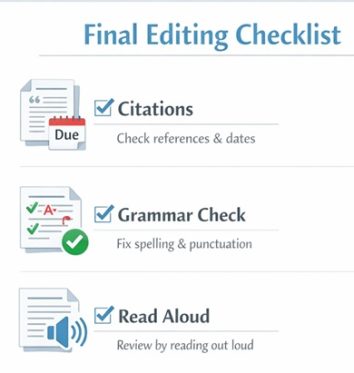
To make sure you pass your US college course, follow these three simple rules:
Ans: Yes. If you follow this 24-hour assignment plan, you are writing at a steady pace. It is much easier than trying to write all 2000 words in one sitting.
Ans: Use the Pomodoro technique for students. Writing in 25-minute sprints with 5-minute breaks keeps your energy high and helps you hit your word count.
Ans: Use fast academic writing tips like using Google Scholar. Search for your keywords and filter by “since 2020” to find fresh data fast.
Ans: Yes. The easy way to cite sources is to use an online citation tool. In the US, most professors prefer the APA or MLA format.
This aligns with standard university academic integrity policies and helps you avoid accidental citation errors.
Ans: Add a detailed example or a “Counter-Argument” section. Explaining why someone might disagree with you adds high-quality words very quickly.
Ans: Knowing how to write an assignment when you’re tired is about the 20-minute power nap. It refreshes your brain much better than an extra cup of coffee.
Ans: That is what the “Final Polish” hours are for. Always leave at least two hours at the end to fix your grammar and make the sentences flow better.
Writing a 2000-word assignment in 24 hours is hard, but it is possible. It is about being organized. You don’t need to be the best writer in the class; you just need to follow the instructions and stay focused.
By using a 24-hour assignment plan—or a structured one-day writing schedule—and focusing on fast academic writing, you can turn a nightmare into a finished project. Once you hit “Submit,” you can finally relax. You did it!
Writing 2,000 words in a day is a marathon. If you want a guaranteed A-grade assignment without the all-nighter, we are here to help.

I am an English literature specialist with experience in critical analysis and academic writing. I support students with well-researched essays and literature-based academic assignments.










 WhatsApp

