


 08 June,2026

Table of Contents
Today, education has gone beyond the classroom and campus boundaries. Current technology allows students to attend online classes and collaborate with colleagues from different continents. It also helps students to interact with professionals without leaving their homes. One of the most valuable opportunities generated by this current technology is the option of remote learning and remote networking.
Remote networking enables students to interact with industry experts, recruiters, fellow students, and professors through various virtual learning platforms. It also helps students to build meaningful relationships for better career growth.
Many students focus primarily on academic goals and grades but neglect the importance of networking. Due to this, they soon start feeling isolated and eventually lose interest.
This blog by MyAssignmentHelp explores the major benefits of remote networking for students and explains why having a strong professional network is essential for better academic and career growth.
The term remote learning refers to building and maintaining meaningful professional relationships with peer students, colleagues, professionals, professors, and industry leaders through digital platforms.
Students can network remotely through:
These platforms allow virtual networking for students so that they can interact with the people belonging to the same industry and interest from different locations.
These statistics highlight why remote networking has become an essential skill for students seeking internships, mentorship, and career opportunities.
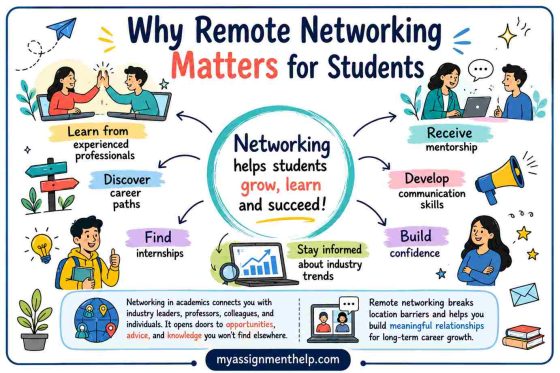
Networking in academics is one of the most important career-building activities that help students to connect with industry leaders, professors, colleagues, and individuals. Students who actively engage in networking are able to access information, advice, and opportunities that may not be available somewhere else.
Networking skills for students allow them to
Remote networking makes these benefits accessible to students regardless of their location. It is a must-have online learning skill that enables students to learn, understand industry trends, and build meaningful professional relationships that support long-term career growth.
If you are a student and want to build a network of professionals using networking sites, follow the steps given below
By following these simple steps, you can build a solid network of professionals.
What are the Benefits of Remote Networking for Students
There are many benefits of remote networking. Let’s understand each one by one.
One of the prime benefits of remote networking is the ability to communicate and share information with people around the world. In the traditional form of education, networking is restricted to colleagues, professors, and nearby institutions but E-learning breaks all these restrictions by empowering students to engage with professors and students from different countries and industries.
Students can:
Through these global networking skills, students get internships, collaboration, and career opportunities for a brighter future.
Referrals and recommendations from trusted professionals help Job seekers get better opportunities. Many employers value referrals, and if you have good networking capabilities, you can easily establish relationships with
These connections can easily help students to get into job openings, internship programs, and graduate opportunities.
Students are often confused about
Remote learning comes with networking opportunities, which allows students to have direct interaction with professionals with real-world experience.
Students can ask questions such as:
The guidance from experienced professionals helps students make informed decisions for expected outcomes.
Traditional networking opportunities involve various expenses such as
However, in remote learning, networking can easily be done using online platforms from home. In the online learning setting, students learn through webinars, video conferencing, and interactive online classes, which help students to understand industry concepts.
This particular combination of networking and visual learning encourages students to actively participate in relationship-building activities and expand their connections with industry experts and professionals.
5. Increased Confidence and Communication Skills
In offline learning, students who are introverted in nature often feel nervous when meeting professionals face-to-face. But in remote learning, students can overcome the hesitation by simply participating in various confidence-building activities.
They can:
Over time, these interactions help students to build confidence and overcome hesitation through communication.
Students who actively participate in network building activities are well aware of technological advancements and changing market trends
Students who network remotely can stay updated on:
Following professionals and participation in online discussions help students to stay relevant and informed in this rapidly changing learning environment.
In a student’s academic career, a genuine mentorship can create magic and become the most valuable resource for academic success.
A mentor can provide:
In a remote learning and networking environment, students can easily connect with mentors, regardless of location. These mentors can help them fetch career opportunities. They also guide students on whom to consider when having thoughts like “Can someone do my online class for me“? When overwhelmed by a demanding schedule of online classes.
Internships play a crucial role in career development, especially when beginners are seeking jobs. With a strong network, students can discover various career-shaping internship opportunities that are not possible through considering traditional job postings.
Students who actively participate in networking often gain access to
These advantages increase the likelihood of securing valuable work experience.
With remote networking, students can create and maintain a professional online brand. And they can do this by sharing achievements
Having a strong personal brand helps students stay ahead of the crowd and attract better opportunities.
Textbooks are the foundation of knowledge, but real-world learning comes from real-world insights from professionals working in the field.
Remote networking exposes students to:
These insights help students to broaden their academic understanding and career goals
Students can maximize networking opportunities using a range of different online platforms.
One of the best networking tools for students in recent times is LinkedIn. It allows people to build a healthy real word professional relationships globally.
With this platform, students can
Many industries have professional organizations that host virtual events and networking sessions.
Students can join these communities to connect with experts and stay informed about industry developments.
Online learning platforms are integrated with AI-enabled LMS systems designed to offer professional courses, including discussion forums and networking opportunities. These platforms encourage students to participate with instructors and other fellow students from all over the world.
Alumni networks are excellent networks to meet graduates in other industries. Alumni like to assist students through mentorship and career guidance.
Virtual Conferences and Webinars
Industry events provide direct access to professionals, recruiters, and thought leaders.
Students should actively participate in discussions and follow up with speakers after events.
The following are the best student networking tips to maximize benefits from remote networking:
Make sure online profiles contain the following:
Networking isn’t just about looking for work; it’s about establishing connections.
Engagement is a must for maintaining visibility online.
Students can:
Follow up
Once you have made contact, follow up with a courteous message thanking them for their advice and time.
Offer Value
Students can also share resources, insights, and support in professional communities.
When remote networking, students should avoid the following mistakes
To make a connection, it takes patience and professionalism.
With this increasing trend toward digital communication and remote work, remote networking is expected to increasingly play a vital role for organizations.
Future professionals will increasingly rely on virtual platforms to:
Students who will start networking at the earliest stage will definitely have the advantage in this globally connected environment
As you can see, remote networking has become an essential part of students’ academic journey. With this skill, students can connect with new opportunities, mentors, internships, and enhance their ability to communicate with others. Like all other skills, such as programming and AI skills, having networking as an additional skill set has become mandatory for academic success. Students who are able to understand the importance of remote networking at an early stage often stay ahead of the competition and are actively able to pick up opportunities and can crack jobs after course completion. That’s the reason why neglecting the importance of online networking for students can limit their professional growth, reduce access to valuable opportunities, and make it more difficult to build a successful career in today’s competitive job market.
Building professional connections takes time. Get engineering class support to stay on top of coursework while pursuing career growth opportunities.
Engineering Class HelpWith remote networking, students can fetch better career opportunities, find mentors for guidance, and build healthy professional relationships with people globally.
Networking is only possible when you do not hesitate to speak up for yourself and try to connect with others by sharing thoughts and insights. Students practicing networking work on their communication skills, which helps them boost their confidence.
LinkedIn is one of the best networking platforms for working professionals and students.
Networking platforms are for everyone who wants to build healthy professional relationships globally and break the geographical networking limitations.
Remote learners can participate in discussion forums and connect with their colleagues through information sharing to improve their networking skills.

I am an experienced class-help specialist supporting students across all subjects. I assist with online classes, coursework, and exam preparation, delivering structured academic guidance, reliable subject coverage, and consistent support to help students succeed confidently.










 WhatsApp

