


 09 March,2026

Table of Contents
The world is evolving rapidly. Almost everything around us is now connected with technology. From taking online courses to texting our friends, everything is related to digital advancement happening worldwide.
In this era, a person who wants to stay tall against all the odds must have proper digital literacy, which means they should be aware of all the technological changes happening globally. From managing finances to browsing educational stuff or managing a full-fledged corporate job, everything is related to the information and its processing.
Today, digital literacy is not just about using a computer for sending emails or simple browsing. It has become a part of our daily routine. Students are now more inclined towards online AI courses rather than traditional degrees. Employers prefer individuals who have good AI skills as well as digital literacy.
Students who want to thrive in the comparative marketplace must have a complete understanding of how digital literacy affects one’s career growth. To ease this, experts at MyAssignmentHelp brought this blog to explain what digital literacy is and why it’s essential for people of every age group in today’s digitalised world
Digital literacy refers to the ability to find, evaluate, create, and communicate information using digital technologies. It involve uses of digital devices such as computers, smartphones, tablets and the internet to perform all tasks for one absolute purpose. In simple words, we can explain that digital literacy is a practice of using all the technologies out there in the world logically and safely.
For example, when conducting a business study like a Nike PESTLE analysis, a digitally literate person doesn’t just search the web blindly. Instead, they use advanced search techniques to find credible market reports, critically evaluate the sources for bias, analyze how political or environmental factors impact the brand, and then use digital tools to present their findings clearly and securely.
A person who is digitally literate can do things like:
Digital literacy is a key skill for today, just like reading and writing.
Also Read: Data Science vs Data Analysis: Roles, Responsibilities & Differences
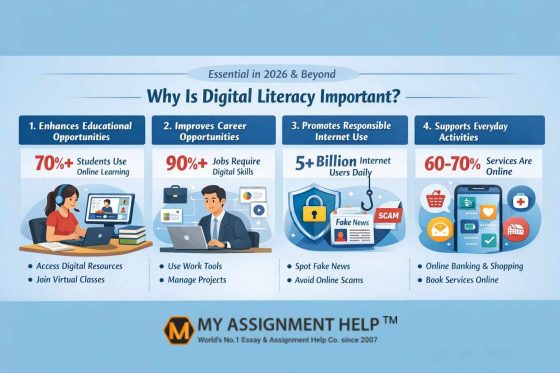
Technology is transforming education, business, healthcare and communication. Due to this unceasing transformation, digital literacy has become a necessary skill as important as AI skills in 2026.
The following are some of the reasons why digital awareness is important
Today, students mostly use online resources for their learning. Digital libraries, courses, research databases and educational platforms contain immense amounts of information that students use on a daily basis.
Digital literacy helps students:
Without digital literacy, students may struggle to navigate online learning platforms. For example, students in online courses may face issues like poor internet or missing classes due to personal commitments. When overwhelmed, many search online, Can someone take my online class for me? However, digitally literate students know where to find reliable support quickly. This shows the true power of digital literacy.
Employers are seeking individuals who are not afraid of online tools. Digital technology is applied in most working environments to communicate, manage projects, and document. Learning skills such as the sequel coding language can also improve digital competence and workplace readiness.
Individuals who are well digitally literate tend to get better employment and career growth.
The Internet is one of the most widely used technology that allow users to fetch any sort of information from every corner of the world. Where the internet is known for offering its useful material, it is also being criticised for false and manipulated information. Those who lack digital literacy often fall into the trap of false information and become the victim of cyber fraud. This is the reason why everyone needs to have complete awareness of digital practices. A digitally aware person knows how to distinguish between authentic and false information using critical analysis.
With this awareness, you can
Many everyday activities now require digital knowledge.
Examples include:
Digital literacy ensures people can use these services efficiently and safely. Understanding how information spreads across web channels is no longer just an academic exercise—it is an essential life skill. Developing a strong grasp of online marketing basics allows individuals to better interpret consumer trends, identify digital algorithms, and build their own professional brands.
The digital literacy role in modern society goes beyond technical knowledge. It influences education systems, workplaces, governance, and communication.
Digital literacy helps schools and universities use new ways of teaching. Online learning, digital classrooms and educational apps all rely on it.
Students with literacy can:
In offices, digital literacy helps people get work done and come up with new ideas effortlessly.
Employees use digital tools for:
Companies prefer workers who can learn digital tools quickly and adapt to new technology.
Social media platforms, messaging apps, and video calls have transformed communication.
Digital literacy helps people:
It also encourages people to behave responsibly online and interact with others in a respectful way.
Governments and public services are going digital. Many things, like tax filing, government forms and information, are now available online.
Digital literacy allows citizens to:
So digital literacy makes it stronger for people to participate in democracy in the digital age.
Developing digital literacy skills is important for both students and professionals.
Here are some essential digital literacy skills.
The internet has a lot of information. Not all of it is reliable. Information evaluation skills help individuals:
This skill is closely related to information literacy, which focuses on evaluating and using information responsibly, and it is key.
Digital platforms have changed how people communicate.
Digital literacy includes the ability to:
Strong digital communication skills are essential in both academic and professional settings.
Basic technical knowledge is the foundation of literacy.
These skills include:
Technical skills allow individuals to interact confidently with systems. If you feel you are lagging behind and need a push to keep up with new technological advancements, it’s high time to enrol in online computer science courses. You may avail a computer science assignment help to make your learning journey easter and highly productive with other commitments
Cybersecurity threats are increasing worldwide. Digital literacy teaches individuals how to protect themselves
Important safety skills include:
These skills reduce the risk of cybercrime and identity theft, making online safety a priority. For
Modern professionals and students often create content. This digital content creation is a key aspect of digital literacy.
Examples include:
Digital literacy enables individuals to express ideas creatively using digital tools and resources
Also Read: Machine Learning vs Deep Learning: Comparison Guide
Digital literacy includes several interconnected areas. Understanding the types of digital literacy helps people develop well-rounded digital skills.
Information literacy is the ability to locate, evaluate and use information effectively, making it a vital part of digital knowledge.
It involves:
Information literacy is essential for students conducting research and doing data mining for their academic tasks of writing, such as assignments, thesis, dissertation and research papers
Media literacy focuses on understanding and analysing media such as videos, audios, news article and manymore
It helps people:
Media literacy encourages critical thinking when consuming digital content for influential decision-making
Communication literacy involves using communication platforms for data and information sharing
Examples include:
Effective communication literacy improves teamwork and professional interactions.
Technology literacy refers to understanding how tools and devices function.
This includes:
Technology literacy ensures individuals can adapt to new digital tools quickly, and use them effortlessly for various purposes.
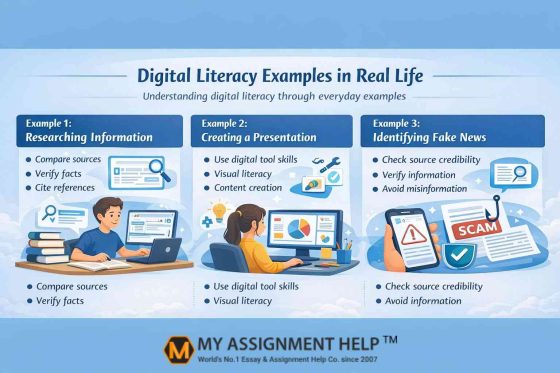
To understand digital literacy lets look at some examples in everyday life.
A student searching for information online must evaluate sources to find information. They may compare articles, verify facts and cite references.
This process shows information literacy and critical thinking which are key components of digital literacy, and digital literacy is essential.
A professional preparing a presentation may use tools to communicate ideas clearly. A perfect example of visual learning that showcases how understanding of tools and services positively impacts students’ growth
This activity requires:
Many people encounter misleading information online.
A literate individual can:
This example highlights the importance of information literacy and how it can help people to make informed decisions, not an influential one.
In today’s world, having digital literacy means you are ahead of most people who have just basic computer knowledge. This skill not only helps you to understand information in a more constructive manner but also helps you to avoid scams and fraud.
Many institutions, both online and offline, offer digital literacy courses to help people learn basic and advanced computer skills alongside current technological trends. These courses are for students, workers, and beginners who want to improve their understanding of digital tools, providing the necessary foundation so you won’t always need to seek expert help to do my project or rely on outside assistance for everyday tasks.
The courses include
Enrolling in these courses not only makes you future-ready for upcoming opportunities but also makes your career journey successful and hustle-free. Students from a non-technical background are also recommended to enrol in these courses, as they are equally beneficial for them. They can also avail themselves of data analysis assignment help to clear data-centric subjective doubts for better understanding
Some of the common challenges that work as a barrier in digital literature are listed below
In remote areas where people don’t have good internet or digital devices. This makes it hard to get literacy over digital tools, services, and devices.
Many people struggle with tools as they have never received training before. To make students familiar with digital devices and technologies, its must for schools and organisations to provide chances to learn digital skills.
Technology changes fast. New platforms, apps and tools keep coming out. This means people must keep learning and adapting to advancements.
To get better at literacy, you need to keep learning and practising.
Using tools every day helps you get confident and familiar with technology. Digital tools are important. Using them makes you good at digital literacy.
Enrolling in a digital literacy courses such as information technology or computer science, boost you knowledge about digital tools and platforms and makes you aware of the current technological advancements. Learning these courses may require you to avail of IT assignment help services for better clarity over concepts and theories
Reading technology blogs and tutorials helps you know about tools and digital trends. Technology keeps changing. You must stay updated.
Checking information carefully is a part of digital literacy. It helps you find misinformation and make choices online.
Digital technology has changed how we learn, work and talk to each other. This change makes digital literacy an integral part of today’s world. It helps people use technology effectively for the desired purpose. It is about understanding what digital literacy means, getting better at it and knowing its types. It encourages people to find the right information, how to talkto people and stay safe on the internet while making content or using digital tools.
It helps people use technology in a confident way. Students, workers and anyone who wants to keep learning can benefit from improving their literacy. It can help them find the right opportunity and do well in a world that uses a lot of technology.
Students in Academics need to work with several tasks and assignments which required the use of the internet. If they are not well aware of the technology and don’t know about the potential risk, they might fall into a cyber attack and experience serious consequences. This is the reason why it is a must for every student to have a complete understanding of digital practices.
People having a good understanding of technology help them in several ways, such as
Students who are digitally aware of the new technology are able to handle most of their academic challenges using resources available on the internet. This empowers them to invest their time more constructively in their learning and contribute to academic growth.
The main types of digital literacy include information literacy, media literacy, communication literacy, technology literacy, and visual literacy. These skills help individuals understand, evaluate, and use digital tools and online information effectively.
The simple meaning of digital literacy is making yourself well aware of practices that ensure the proper execution of information, from finding, evaluating, determining and utilising for an absolute purpose.
The 7 Skills of Digital Literacy are

I am an experienced class-help specialist supporting students across all subjects. I assist with online classes, coursework, and exam preparation, delivering structured academic guidance, reliable subject coverage, and consistent support to help students succeed confidently.










 WhatsApp

