


 09 April,2026

Table of Contents
Education is changing rapidly. Classroom learning is no longer the sole method of learning. Meanwhile, not all people can be engaged in fully online learning. This is where hybrid learning comes in.
Students desire flexibility, accessibility and quality education, all three things from the same learning environment. The hybrid learning model is structured for the same. It integrates the excellent features of online learning and offline learning to provide a more efficient and interactive experience to all students and learning enthusiasts.
This blog by My Assignment Help will help you understand what hybrid learning is, how it functions, and why it is emerging as one of the most desired forms of learning across the globe.
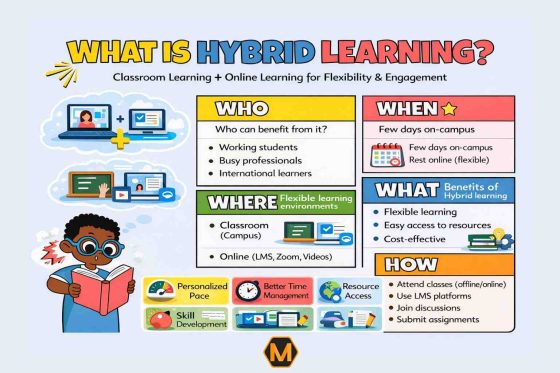
Hybrid learning is a modern learning method which integrates classroom based learning with online learning elements. This model allows students to study both in a real-world classroom and online. This forms a flexible learning environment for all learners in which both modes complement each other.
Compared to the traditional approach, hybrid learning enables students to:
This mix of both learning methodologies makes learning more vibrant and reachable.
For example, a student will spend time on campus two days a week and do the rest of the coursework online.
This model gives assurance that students will receive the advantages of physical and digital convenience at the same time.
A blended learning model is a method of education that involves the integration of classroom teaching and the use of online learning technologies. In addition to the physical classes, students also utilize digital platforms for:
In simple words, we can say it is a combination of traditional teaching and technology, which will make the learning process more flexible and interesting.
Hybrid learning vs blended learning is a common confusion among many students, particularly since the two models are applied in various programs at colleges and universities. Although they both share similarities of online and face-to-face learning, the design, flexibility, and student experiences are quite different.
Hybrid learning is created to provide students with maximum flexibility. It also gives them the option to choose how they attend classes either online or in person, usually on a daily or weekly basis.
Key Features:
Let’s suppose a student in a California community college enrolls in a hybrid Psychology course,
This hybrid learning mode is made for offering flexibility. Online and face-to-face students get an equal learning experience, and the option to switch between the two is not restricted by any conditions.
Hybrid learning mode is quite popular among students who are:
Blended learning is more organized and campus-centric. Students will be expected to attend all the classes and use digital tools for submitting assignments, attending additional lectures using online tools to supplement their learning.
Key Features:
Let’s suppose a student in New York enrolls in a business management course. Here is what he would be expected to do:
Blended utilizes the features of online learning to make it flexible and accessible.
Blended learning is common in:
Involving some elements of online learning makes blended learning effective and engaging for students. However, it still restricts students on flexible scheduling which sometimes leaves students overwhelmed and stressed when coursework is demanding with a heavy workload.
As a result, many students begin to look for alternatives and often ask, “Can someone take my online class for me?” in the hope of finding reliable support. Seeking academic assistance can help reduce the constant pressure of assignments and class participation.
This support allows students to focus their time on more meaningful priorities while also taking care of their health and well-being, ultimately leading to better performance in the long run.
Let’s understand the core differential factors of both the learning through a table
| Feature | Hybrid Learning | Blended Learning |
|---|---|---|
| Mode | Online + In-person (choice) | Mainly in-person |
| Flexibility | High | Low |
| Attendance | Optional (online/offline) | Mostly compulsory (classroom) |
| Focus | Equal mix | Classroom-focused |
| Best For | Busy / working students | Traditional full-time students |
The hybrid learning environment has become more and more relevant with the emergence of digital technology and evolving needs of students.
The mode offers learning flexibility which means students can learn at their own pace. With this model they can be able to attend classes physically or watch the classroom lecture recording later. This comes in particularly handy with:
Hybrid learning eliminates geographical limitations. Students in various locations are able to receive the same quality education.
The learning model combines physical interaction and digital tools to make learning more fun and interactive.
Students can save a lot of money while still receiving a quality education. If you want to explore more about e-learning and traditional learning, we recommend reading our latest blog: What is E-Learning and How is it Different from Traditional Learning? This will provide better clarity and help you understand the hybrid mode of learning more effectively.
Traditional learning restricts the use of technology. The hybrid learning model involves the use of:
This makes learning highly interactive and engaging for students.
Convenience is not the only advantage of hybrid learning. It improves students’ learning and performance.
Students have an opportunity to study at their pace. They can go through recorded lectures in case they do not comprehend the subject.
Online resources such as polls, quizzes, and forums in discussions make students engaged.
This mode empowers students to juggle between studies and other areas in their lives such as jobs or internships.
The flexibility allows students to study out of the classroom setting. Study materials are available to students anytime and they can access them to improve their learning as per their needs and preferences.
These are skills that are critical in career development.
The hybrid learning environment accommodates effortlessly with online and offline learning.
Elements of Hybrid Learning Environment:
Students attend lectures, engage in discussions and communicate with teachers.
Assignments, recorded lectures and learning materials are accessible online.
Students and teachers remain in touch with each other via:
Both online and offline quizzes and assignments are possible.
Although hybrid learning has numerous benefits, there are obstacles associated with this learning style.
Online learning requires students to have a reliable internet connection.
Students are required to regulate time as per their learning schedule, otherwise getting distracted and losing interest could be the major challenges in this mode of learning.
Since the learning model combines online and off-line elements, software/device issues may interfere with learning. To avoid such situations, it is always recommended to use flawless devices and bug-free software
With online sessions, it might be less interactive than a physical classroom.
To make the most of the hybrid learning model, students should follow these tips:
1. Stay Organized: Monitor online and offline schedules.
2. Participate Actively: follow active learning strategies and discuss all the doubts either in the classroom or online.
3. Use Digital Resources: make proper use of audio and video recording devices to ensure you do not miss any important lecture and you have proper recordings for later revision.
4. Maintain Discipline: Establish a fixed schedule of studying and doing homework which should not be affected with other activities
5. Ask for Help: Contact teachers or peers when having academic challenges, such as having subjective and coursework doubts
In this mode of learning students can visit campus lectures two times per week and do assignments, discussions and quizzes on sites such as Canvas or Blackboard.
Practical sessions are held at in-person workshops, and the theory modules and tests are provided online via LMS platforms.
Students can receive the core subjects in the school and do homework, watch recorded lessons, and pass the tests by using Google Classroom at home.
Students are present in-person during weekends and do their weekday studies online by using videos, simulated exams, and online tutoring.
People are inclining towards hybrid learning, not just for flexible learning opportunities, but also there are several benefits that they can get in this mode of learning. It focuses on making individual futures ready and upskill them for the latest market trends.
Now institutions are investing in:
Even organizations are embracing the hybrid training model among the employees. This demonstrates that a hybrid learning environment is here to remain.
Hybrid learning is changing the education system as it integrates the positive features of both traditional and online learning.
Knowledge of the concept of hybrid learning, as well as the functioning of the hybrid learning model, can aid students in making quality decisions with regard to their academics.
The advantages of hybrid learning are indisputable, as it can be more flexible, engaging and accessed by many people globally. The hybrid learning environment will be further improved and become more efficient as technology keeps on advancing.
Hybrid learning is worth considering in case you are looking for a way that would suit your lifestyle and objectives.
Expert help for assignments, exams & full courses. A/B grade with 100% confidential.
Hybrid learning means it is a combination of online and offline learning, which enables students to study at their own place by choosing the preferred mode.
Hybrid mode combines online and offline elements to make learning more accessible for students whereas the learning is primarily focused on classroom based learning which uses some element of digital tools so that education can be accessible out of the classrooms.
The key advantages of hybrid learning are
Yes, hybrid learning is effective as it combines the advantages of both traditional and online education.
Hybrid learning is best suited for those individuals who are generally occupied with full-time or part-time jobs, have family obligations, or want to upskill themselves. Since these individuals have limited time and cannot attend regular classes, this mode is ideal for them.
Hybrid learning does not completely outperform online learning as both the learning methods are designed for serving a specific purpose and preferred as per one’s preferences.
Managing time effectively, being motivated, dealing with technical difficulties, and having a steady flow of communication with instructors are some of the common issues of hybrid learning.

I am an experienced class-help specialist supporting students across all subjects. I assist with online classes, coursework, and exam preparation, delivering structured academic guidance, reliable subject coverage, and consistent support to help students succeed confidently.










 WhatsApp

