


 21 May,2026

Table of Contents
Online education has changed the way education was delivered to students in the last few years. With cloud-based technologies, students can now learn from home, have flexible classes and access learning materials available online. With these benefits online learning has gained immense popularity in recent times. However, there are some drawbacks which students should know before enrolling in any e-learning program. Long screen time, deadline pressure and maintaining concentration for extended sessions can quickly exhaust your mental state.
Stress, lack of energy, failure in concentration and burnout are common problems students suffer in virtual classes. All these together are often referred to as mental fatigue. It impacts productivity, memory, learning capacity and emotions. Due to this, students experience tiredness even after sitting at home throughout the day.
Now the question is: how to overcome mental fatigue? The answer lies in the approach to how students plan, organize and strategize their daily routines for maximum outcomes.
This guide by MyAssignmentHelp describes potential reasons for mental fatigue in online learning and how students can overcome it using practical approaches.
Mental fatigue is the state which occurs when your brain becomes really tired from continuous concentration, stress, and processing too much information at once.
In online learning, students usually switch between lectures, assignments, emails, discussions, and notifications. This continuous mental effort drains both energy and focus.
Unlike physical tiredness, mental fatigue mainly affects the way you think and function mentally.
Students may experience:
Online learning can make these problems worse because students often spend long hours alone in front of screens with limited face-to-face interaction.
Before learning how to avoid mental fatigue in online courses, students should understand why it happens.
In online courses students are required to spend hours every day on their devices for lectures, assignments, research and online communication.
All this screen time negatively impacts eyes and brain. The blue light from screens can also mess up their sleep patterns and make them feel more tired.
In a traditional classroom setting students interact with teachers and colleagues. They talk, walk, discuss ideas and study in a highly engaging environment.
But in an online learning environment they don’t have much communication opportunities and often sit in one place for hours. Not moving around enough can make their blood circulation slow which eventually drops energy levels.
Online courses come with a variety of study materials: Videos, PDFs, emails, quizzes and discussions. Managing and completing all the tasks with perfection can be really overwhelming. The brain needs time to process everything properly.
In online courses, most of the students face difficulties due to poor time management. It happens because they think learning online is easier than offline classroom learning as it gives them flexibility to learn at their own place with preferred timings.
However, this flexibility is the reason behind the procrastination among some students. Due to this, they start skipping classes and develop habits of doing everything at the last minute. This triggers fatigue much worse.
Online courses come with limited face-to-face interaction. Students are generally isolated and they don’t have many opportunities for communication with instructors and classmates.
As we all know, communication plays a major role in helping students create a cheerful learning environment, which is usually absent in online mode of learning. This isolation makes students anxious and tired emotionally.
These are some major reasons why students experience stress and anxiety and are prone to mental fatigue in online courses. Academic pressure and mental exhaustion often make students search for support options and ask, “can someone do my online class for me?” This clarifies how critical it is for students to identify and overcome mental fatigue for expected results.
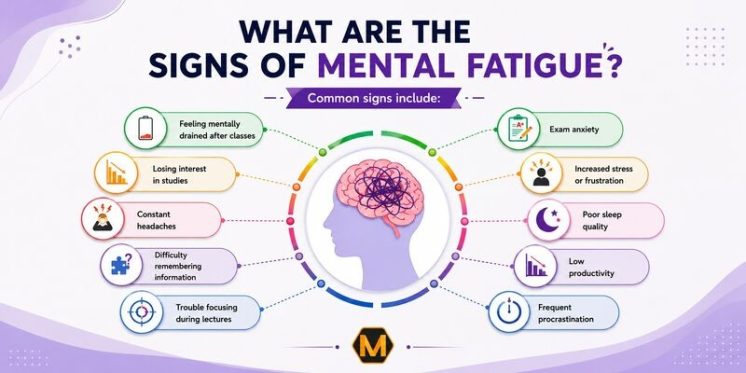
Knowing symptoms of mental fatigue early can help students take appreciate action before it’s too late.
Common signs include:
These are some symptoms that students usually experience if they deal with mental fatigue. Also if these symptoms remain the same students should change their study habits immediately.
To avoid mental fatigue in online courses follow the given tips mentioned below
One of the ways to avoid mental fatigue in online courses is to maintain a proper routine. In online learning students who follow a set schedule are able to stay organized and reduce unnecessary stress.
The typical routine for online learners includes:
Students, especially working professionals who follow set routines are able to effectively manage jobs and online classes altogether. They also experience lower stress levels and better concentration.
Example Daily Routine
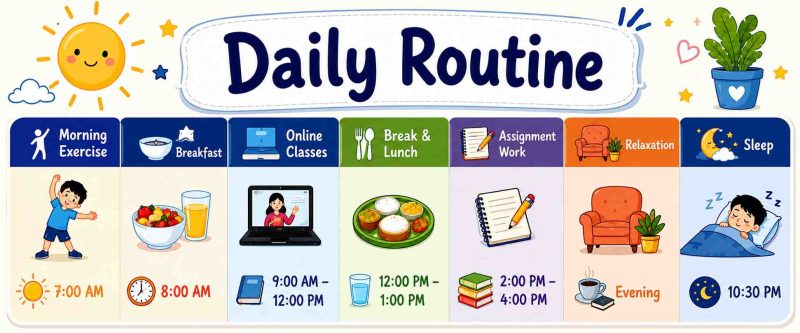
Consistency trains the brain to work more efficiently.
Studying continuously for hours can quickly exhaust the brain. Using the Pomodoro Technique improves concentration while preventing burnout.
Here is how the Pomodoro Technique works for students:
This method helps students avoid potential causes of stress in academics and exhaustion.
One major reason online students experience fatigue is constant distractions from notifications, social media, and multitasking. The brain gets distracted and tired when it frequently switches attention between tasks.
Here are some tips to minimize distractions while learning
Focused learning reduces stress and improves efficiency.
The study space of online learners significantly affects their concentration and energy. A poor learning environment increases stress and fatigue.
Here is an ideal study setup for students:
Students should also maintain proper posture to avoid physical discomfort.
Do not set any goal for yourself which you cannot achieve. You don’t have to overestimate yourself, but you must have an idea of how much effort you can put in for a particular goal. This way you can clearly set a goal and work towards success.
Here are some smart goal-setting tips for students:
Realistic planning reduces anxiety and improves productivity for online learners.
The brain needs recovery from digital exposure. Online students should spend some time completely away from screens and do offline activities for better focus every day.
Here are some offline activities for students:
These activities refresh the mind naturally and keep students focused and engaged in the process.
Using productivity tools can reduce mental fatigue and help you stay organized and motivated.
Here are some helpful tools for online learners
Apart from these tools, having a prior knowledge about LMS platforms empowers students to effectively cope with the online learning environment and helps them overcome technical challenges.
Students often hesitate to seek help because they fear judgment. Don’t overthink this much, an online learning platform poses the same challenges in front of all students. Thinking that you will be judged is baseless so stop worrying about it and ask for help whenever you need it. Struggling alone can worsen fatigue and negativity impact your academic growth.
Students should reach out to:
Seeking support is a sign of responsibility and essential online learning skill, not weakness.
Online education has many benefits. This is the reason why it is quite popular among learners. However, it brings some unique mental challenges that cause anxiety and stress among students. Knowing how to handle these challenges of online education helps students to avoid mental fatigue in online courses and promote long-term success.
Mental fatigue in courses is mainly because of too much time spent looking at screens, not managing time well, not doing enough physical activity and being around people.
Students can avoid stress in online courses by following a set routine of learning and properly managing their time, followed by healthy habits.
Yes. Spending too much time looking at screens is quite harmful for mental health. It can hurt your eyes, disturb your sleep cycle and make it hard for you to focus.
Mental fatigue is primarily caused by excessive screen time, digital information overload, poor time management that leads to last-minute cramming, and the social isolation of studying alone for extended periods.
You can beat digital burnout by building healthy study habits, applying the Pomodoro Technique, organizing a clutter-free workspace, and taking intentional, screen-free breaks to rest your eyes and mind.
Yes. Excessive screen exposure causes severe digital eye strain, creates persistent tension headaches, and disrupts your natural sleep cycles by exposing you to blue light, directly reducing your daily focus and productivity.

I am an experienced class-help specialist supporting students across all subjects. I assist with online classes, coursework, and exam preparation, delivering structured academic guidance, reliable subject coverage, and consistent support to help students succeed confidently.










 WhatsApp

