


 03 December,2025

Table of Contents
The expository writing style is the foundation of academic and professional communication. If you are learning how to write clear, objective, and information-driven essays, you are mastering the expository style. This genre, which is distinct from argumentative, narrative, and descriptive writing, has one primary goal: to explain, inform, or define a subject using objective, verifiable facts and logical organization.
This complete guide is designed to transform your understanding of the expository essay, detailing its core characteristics, breaking down the six most common academic types, and providing the definitive structural guide for college students.
Mastering the objective tone of this genre can be difficult, which is why many students seek help with expository essay writing from subject matter experts.
Expository writing demands precision, objectivity, and a mastery of structure. If you are facing a tight deadline, dealing with a complex topic, or simply need assurance that your paper meets the highest academic standards, you can rely on our professional writing service.
Get an expert to write your expository paper perfectly today.
The word “expository” stems from the root “expose,” which means to set forth or explain. Therefore, the expository essay definition is any non-fiction work committed to revealing information about a subject without injecting the author’s personal beliefs or feelings.
Expository writing is ubiquitous in daily life. You encounter it in:
To truly master the style, you must understand how it differs from the other major writing types, a distinction often overlooked by basic guides.
| Feature | Expository Writing | Persuasive/Argumentative Writing | Narrative Writing |
|---|---|---|---|
| Primary Goal | To explain and inform | To convince the reader of a single viewpoint | To tell a story or recount an experience |
| Tone | Objective, Neutral, Formal | Subjective, Passionate, Authoritative | Engaging, Personal, Emotional |
| Evidence | Facts, Statistics, Definitions | Facts, Statistics, Appeals to Logic (Logos) & Emotion (Pathos) | Sensory details, Dialogue, Plot points |
| Perspective | Third-Person Only | Usually Third-Person, but often uses “we” | First-Person (I) or Third-Person |
These four rules represent the absolute requirements for any paper utilizing the expository writing style. Ignoring them will result in a lower grade or a paper that misses the core expository essay definition.
For guidance on source quality, consult authoritative academic resources like the Myassignmenthelp, Purdue OWL : Expository Essays on evidence and support.
A key component of knowing how to write an expository essay is recognizing which structural type your topic requires. Academic instructors categorize expository writing into six primary structures, each with a unique purpose and organizational pattern.
Purpose: To describe or characterize a subject, object, person, or place with factual and sensory details.
Detailed Example: Describing the Structure of a Tsunami Wave
A descriptive essay on a tsunami would not tell a personal story of being caught in one (narrative), nor would it argue for better warning systems (persuasive). Instead, it would focus purely on the wave’s measurable characteristics:
| Section | Focus | Expository Detail |
|---|---|---|
| Introduction | Define Tsunami (a series of waves created by a large-volume displacement of water). | Thesis: The wave progresses through three distinct structural phases—generation, propagation, and inundation. |
| Body Paragraph 1 | Generation Phase: Detail the cause (e.g., underwater earthquake, volcanic eruption) and the measured displacement of water. | Fact: Most tsunamis are triggered by tectonic plate movement causing seabed rupture. |
| Body Paragraph 2 | Propagation Phase (Open Ocean): Describe the wave’s size in the deep ocean. | Fact: In the deep ocean, a tsunami wave may only be 1 meter high but can travel at speeds of up to 500 miles per hour. |
| Body Paragraph 3 | Inundation Phase (Near Shore): Explain how the wave structure changes as it approaches shallow water. | Fact: As the wave enters shallow water, its speed drops sharply while its height increases due to conservation of momentum. |
Purpose: To explain a process, procedure, or sequence of events in chronological order. This is your “How-To” guide, but academic.
Detailed Example: Explaining the Process of Photosynthesis
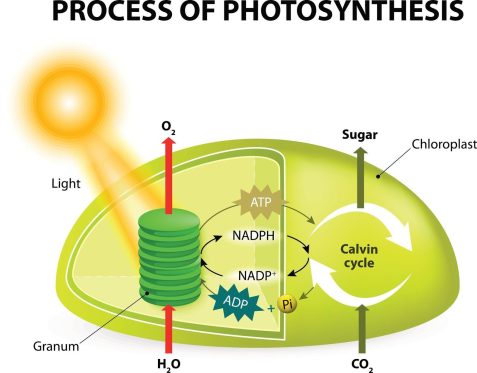
A sequential essay on photosynthesis must follow the steps exactly:
| Step in Process | Focus | Expository Detail |
|---|---|---|
| Introduction | Define Photosynthesis. | Thesis: Photosynthesis is a complex, two-stage process—light-dependent and light-independent—essential for converting solar energy into chemical energy. |
| Body Paragraph 1 | Light-Dependent Reactions: Detail the initial steps occurring in the thylakoid membranes. | Fact: Chlorophyll absorbs light energy, converting water (H₂O) into oxygen (O₂) and generating energy carriers (ATP and NADPH). |
| Body Paragraph 2 | Light-Independent Reactions (Calvin Cycle): Detail the use of energy carriers to produce sugar. | Fact: In the stroma, ATP and NADPH convert carbon dioxide (CO₂) into glucose (C₆H₁₂O₆), completing the sequential energy conversion. |
| Conclusion | Summary of the overall chemical process and its global impact. | Reiteration: The flow from light energy capture to sugar synthesis is the primary mechanism powering Earth’s food chain. |
Purpose:To explain the similarities and differences between two or more subjects to deepen the reader’s understanding of both.
Detailed Example: Comparing Capitalism and Socialism:
| Comparison Point | Focus | Expository Detail |
|---|---|---|
| Introduction | Define both systems. | Thesis: While both capitalism and socialism are economic models designed to distribute resources, they differ fundamentally in resource ownership and incentive structure. |
| Point 1: Ownership | Capitalism: Private ownership of production. Socialism: Collective or state ownership. | Fact: In the U.S. (Capitalism), private entities own oil refineries; in China (State Socialism), the government may control majority stakes in major utilities. |
| Point 2: Incentive | Capitalism: Innovation driven by profit and competition. Socialism: Motivated by collective welfare and equality. | Fact: Capitalist systems rely on market forces for pricing; socialist systems often use central planning for resource distribution. |
| Conclusion | Summarize philosophical differences. | Reiteration: Both models aim to manage resources, but they diverge sharply on who controls them and for what purpose. |
Purpose: To explain the causal relationship between an action (cause) and its resulting consequences (effect).
Detailed Example: Causes of the 2008 Financial Crisis:
| Causal Chain | Focus | Expository Detail |
|---|---|---|
| Introduction | Define the Crisis. | Thesis: The 2008 Global Financial Crisis was triggered by a cascade of factors—deregulation, subprime lending, and complex financial instruments. |
| Cause 1 | Deregulation: Explain the relaxation of banking laws in the 1990s. | Fact: The repeal of the Glass-Steagall Act (1999) allowed commercial and investment banks to merge, raising systemic risk across the financial sector. |
| Cause 2 | Subprime Lending: Explain the effect of extending credit to unqualified buyers. | Fact: Risky adjustable-rate mortgages (ARMs) were issued to borrowers with poor credit, inflating a housing bubble that burst when rates reset. |
| Effect | Economic Collapse: Detail the result of the causes. | Fact: Massive mortgage defaults caused major financial institutions to collapse, triggering a global recession and confirming the severity of the initial causes. |
Purpose: To explain a specific problem and then propose one or more feasible, objective solutions based on existing data or theoretical models.
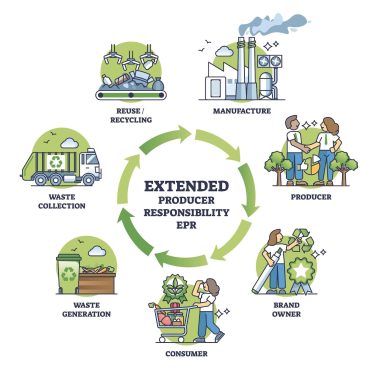
Detailed Example: Explaining the Problem of E-Waste and Policy Solutions
| Section | Focus | Expository Detail |
|---|---|---|
| Introduction | Define E-Waste. | Thesis: The rapid obsolescence of consumer electronics has created a massive problem of electronic waste, which requires a multi-faceted regulatory solution involving Extended Producer Responsibility (EPR). |
| Problem Scope | The Crisis: Define the volume and danger of e-waste. | Fact: E-waste volumes are increasing rapidly, often containing toxic elements like lead and mercury, which contaminate groundwater at unregulated disposal sites. |
| Solution 1 | Extended Producer Responsibility (EPR): Explain this policy solution. | Fact: EPR laws require manufacturers to manage the lifecycle of their products, financially or physically, once the consumer discards them, incentivizing more durable and recyclable designs. |
| Solution 2 | Consumer Incentives: Explain the role of public programs. | Fact: Government-backed programs offering trade-in credits for old devices have increased recycling rates by X%, demonstrating the feasibility of policy intervention. |
Purpose:To explain a broad subject by breaking it down into distinct categories or classes, defining each group based on shared characteristics.
Detailed Example: Classification of Renewable Energy Sources:
| Category | Focus | Expository Detail |
|---|---|---|
| Introduction | Define Renewable Energy. | Thesis: Renewable energy can be classified into three distinct categories based on their source origin: Solar/Thermal, Kinetic, and Biomass-Derived. |
| Category 1 | Solar/Thermal Sources: Defined by energy derived from the sun’s radiation. | Fact: This category includes photovoltaic panels (direct conversion) and concentrated solar power (heat generation), both relying on continuous solar input. |
| Category 2 | Kinetic Sources: Defined by energy derived from movement in natural systems. | Fact: This includes hydroelectric dams (falling water), wind farms (air movement), and tidal power (ocean movement), all relying on physical force to spin turbines. |
| Category 3 | Biomass-Derived Sources: Defined by energy derived from organic, recently living materials. | Fact: Biomass includes burning wood, agricultural waste, or converting landfill gas (methane) into fuel, differentiating it from fossil fuels which are ancient organic matter. |
Regardless of which of the six types you employ, the general expository essay structure for college students follows the classic five-paragraph format (or longer, depending on scope). The most important factor is the seamless, logical progression of ideas.
The introduction must achieve three things: hook the reader, provide background context, and state the thesis.
The expository thesis statement is the single most important sentence, acting as the structural foundation of your entire paper. It is informative, not argumentative.
Example of an Informative Thesis:
“The rapid proliferation of digital devices has generated a severe e-waste problem, requiring the implementation of two primary strategies: Extended Producer Responsibility (EPR) legislation and integrated consumer recycling incentives.”
For detailed guidance on formulating a clear scope, consult our Thesis Statement Construction Guide.
The body is where you present your facts and evidence in a logical sequence. Each paragraph must operate like a miniature expository paper, focused on one aspect of your thesis.
Every body paragraph must begin with a topic sentence that clearly states the focus of that paragraph and links directly back to the main thesis. This ensures the reader never loses the central thread of your explanation.
The rest of the paragraph is dedicated to proving the topic sentence using external data. This is where you incorporate statistics, definitions, expert citations, and specific examples.
Use strong transition words and phrases (Furthermore, Consequently, Similarly, In contrast, Moreover) to link ideas within paragraphs and ensure smooth flow between paragraphs. These transitions are the mortar that holds the foundation of your essay together, ensuring the reader never loses the central thread of your logical explanation.
For high-stakes assignments, always perform this quick check before submitting:
The main characteristic is objectivity. Expository writing is purely informational and factual. It never attempts to persuade the reader or change their mind; its sole function is to present clear, balanced information. This is often the primary reason students lose points when writing expository papers—they accidentally introduce argumentative language or personal opinions.
Only if the assignment explicitly allows it, and even then, sparingly. In strict academic and professional expository writing (especially in science or history), personal examples violate the rule of third-person objectivity and factual evidence. Stick to data, statistics, and citations from authoritative sources.
The length is always defined by the assignment prompt. However, the five-paragraph structure (introduction, three body paragraphs, conclusion) is the standard model for shorter assignments, typically ranging from 500 to 800 words. Longer research papers (1500+ words) simply expand the body section, maintaining the core structural integrity of the introduction and conclusion.
Excellent expository topics are found anywhere information needs to be explained. Look for prompts involving:
For hundreds of targeted, topic-specific ideas, check out our Comprehensive Expository Essay Topics.
Mastering the expository writing style is essential for success in college and beyond. It requires precision, extensive research, and disciplined adherence to structure.
If you have researched and outlined your essay but are struggling with maintaining the objective tone, structuring your comparisons, or ensuring your sources are perfectly integrated, our professional academic writers are ready to help.
Submit your perfect, fact-based paper today.

I am an academic writing specialist focused on essays, assignments, grammar accuracy, and proper referencing. I ensure clarity, originality, and strict adherence to academic citation guidelines.










 WhatsApp

