Get Instant Help From 5000+ Experts For
question

Writing Get your essay and assignment written from scratch by PhD expert

Rewriting: Paraphrase or rewrite your friend's essay with similar meaning at reduced cost

Editing:Proofread your work by experts and improve grade at Lowest cost

And Improve Your Grades
myassignmenthelp.com
loader
Phone no. Missing!

Enter phone no. to receive critical updates and urgent messages !

Add File

Error goes here

Files Missing!

Please upload all relevant files for quick & complete assistance.

Guaranteed Higher Grade!
Plagiarism checker
Verify originality of an essay
essay
Get ideas for your paper
Plagiarism checker
Cite sources with ease

The Ultimate Guide to Human Anatomy Dissertation: Topics, Structures, and Research Ideas

human anatomy dissertation topics guide with muscular system illustration for medical students

Table of Contents

Anatomy is the branch of biology concerned with the study of the structure of organisms and their parts. In a US academic context, specifically within MD and PhD tracks, anatomy is categorized into two primary fields:

  • Gross Anatomy (Macroscopic Anatomy): The examination of biological structures visible to the naked eye, often involving cadaveric dissection.
  • Microscopic Anatomy: The study of tiny structures (cells and tissues) using specialized imaging and microscopy.

If you are struggling with the complexities of these structures, seeking professional medical assignment help can ensure your work meets clinical standards.

Anatomy vs. Physiology: The Crucial Difference

The primary difference is that Anatomy focuses on physical structure and organization, while Physiology explains biological function and mechanisms.

Feature Anatomy Physiology
Focus Physical Structure & Organization Biological Function & Mechanism
Research Goal Mapping the “What” and “Where” Explaining the “How” and “Why”
Entity Macroscopic/Microscopic Form Homeostasis & System Interaction
Methodology Dissection, Imaging (MRI/CT), Histology Lab Experimentation, Chemical Analysis
Key Question What does this organ look like and where is it? How does this organ work within the system?

My Personal Strategy: My advice? Don’t pick just one. The “Secret Sauce” for a high-grade dissertation is showing how a structure enables a function. For example, don’t just study the heart’s shape. Study how that shape helps it pump blood during stress.

Anatomy is the “What” (structure). Physiology is the “How” (function). Anatomy maps the body, while physiology explains how systems like homeostasis work to keep us alive. Understanding this relationship is fundamental to biology assignment help and advanced research.

Let’s be honest: Writing a dissertation is hard. Most students pick a topic that is too big. They get lost in too much data. I have seen many people fail because they didn’t have a clear plan. This guide makes it simple. We use short steps to help you finish fast. I have seen many students fail because they try to do too much. They pick a topic like “The Human Heart.” That is not a dissertation; that is an encyclopedia. My best advice? Find one tiny problem in one tiny part of the body. Solve that, and you will pass with flying colors. This guide helps students find narrow anatomy research topics. It covers structure, US academic standards, and expert tips for MD and PhD levels.

Quick Guide: The “Cheat Sheet” for Anatomy Success

If you’re in a rush, here is the anatomy of a winning project:

  • The Golden Rule: Connect a structural anatomical feature to a functional clinical outcome.
  • Top Tech for 2026: If possible, incorporate AI-driven imaging or 3D bioprinting into your methodology.
  • The “US Standard” Check: Ensure your topic aligns with USMLE/AMA clinical relevance.
  • The Shortcut: Skip “General Anatomy” and head straight to “Neuroanatomy” or “Pathophysiological Remodeling” for higher academic impact.

What is the Study of Anatomy? (Core Principles)

Anatomy is the study of body structures. It has two parts: Gross Anatomy (visible) and Microscopic Anatomy (tiny). It is the base for all medical training in the US.

Anatomy is a field of biology. It looks at how the body is put together. You study where organs are and how they look. Students skip the basics too fast. You must know the “why” before the “what.” If you don’t understand basic structures, your advanced research will fall apart. Start with a strong definition in your intro.

The Fundamentals of Human Anatomy

Anatomy is the base for all medical training in the US. To understand how the body is put together, you must look at these two primary levels:

  • Gross Anatomy (Macroscopic): If a biological structure is visible to the naked eye, it is Gross Anatomy. This often involves the examination of organs through cadaveric dissection.
  • Microscopic Anatomy: If a structure is too tiny to see without help, it is Microscopic Anatomy. This field uses specialized imaging to study individual cells and tissues.

The Golden Rule for Anatomy Success:

If you connect a structural anatomical feature to a functional clinical outcome, then you have the “Secret Sauce” for a high-grade dissertation.

Many students fail because they only describe the “what” (structure) without explaining the “how” (function). For example, do not just study the shape of the heart. Instead, study how that specific shape helps the heart pump blood during times of stress. Focusing on one tiny problem in one specific part of the body is the best way to pass with flying colors.

How to Structure a Human Anatomy Dissertation for US Standards?

A standard US anatomy dissertation requires eight key components: Title Page, Abstract, Introduction (defining the gap), Literature Review, Methodology (IRB/Imaging), Results, Discussion (clinical impact), and Conclusion. Strict adherence to AMA or APA formatting is required for medical validity.

  1. Title Page: A concise title featuring your specific anatomical focus.
  2. Abstract: A 250-300 word summary of your research gap and findings.
  3. Introduction: Definitions of core anatomical entities and the significance of the study.
  4. Literature Review: Comprehensive analysis of existing anatomical research and clinical trials.
  5. Methodology: Detailed account of dissection techniques, imaging (MRI/CT), or histological staining used.
  6. Results: Data-driven presentation of anatomical variations or physiological findings.
  7. Discussion: Interpretation of how your findings impact current medical knowledge.
  8. Conclusion & Recommendations: Future directions for clinical anatomy.

Every high-scoring US dissertation follows a specific structural DNA. Use this table to ensure your outline is complete:

Dissertation Section Purpose & Student Goal Key Entities to Include
Introduction Define the “Anatomical Gap.” Gross Anatomy, Medical Significance.
Literature Review Prove you’ve read the experts. Peer-reviewed journals, Histological history.
Methodology Explain how you looked. IRB Approval, MRI/CT, Cadaveric Study.
Results Show the raw anatomical data. Morphometric variations, Statistical p-values.
Discussion Explain why the structure matters. Clinical application, Surgical implications.

🟣 Latest Trends in Anatomy 2026 

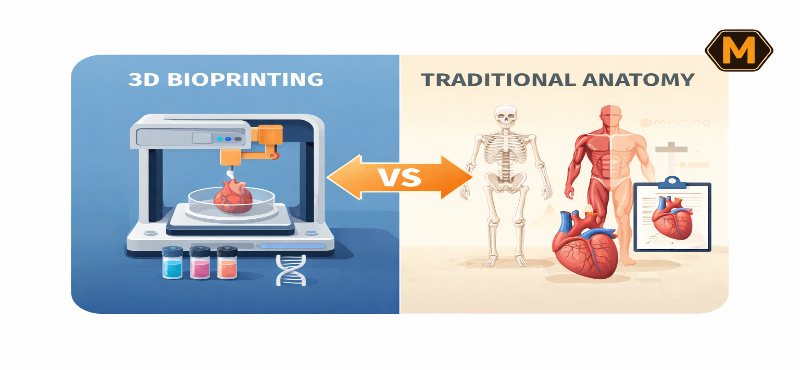
3D bioprinting vs traditional anatomy diagram showing modern medical technology and human body study methods

Anatomy is changing fast. It is no longer limited to books and diagrams. New tools make learning more visual, simple, and smart. Students now use AI, digital tools, and 3D models. These trends help in both research and learning. Adding these topics to your paper can improve your score.

🚀 Top 20+ Anatomy Trends

  1. AI-based anatomy learning tools
  2. 3D bioprinting of human organs
  3. Virtual dissection labs
  4. MRI-based anatomy research
  5. CT scan imaging in anatomy studies
  6. Augmented reality (AR) in anatomy learning
  7. Virtual reality (VR) anatomy simulations
  8. Digital anatomy platforms for students
  9. AI-driven disease detection using anatomy
  10. Brain mapping technology
  11. Personalized anatomy studies
  12. Computational anatomy models
  13. Smart prosthetics and body design
  14. Robotics in surgery and anatomy
  15. Machine learning in medical imaging
  16. Digital twin models of the human body
  17. Organ-on-chip technology
  18. Bioengineering and tissue design
  19. Automated image analysis in anatomy
  20. Remote anatomy learning systems
  21. Nanotechnology in anatomical research
  22. Genetic impact on body structure

What Actually Works

Many students try to cover too much. This is the biggest mistake. If your topic is too wide, your paper becomes weak. You will not explain things clearly. Instead, choose one small idea and study it well. Also, always connect structure with function. Do not just describe body parts. Explain how they work. If possible, add one modern trend like AI or 3D tools. This makes your work look updated and more valuable.

For students who find the scope of such a project overwhelming, using a dissertation writing service or obtaining research proposal help can provide a clear plan.

Creative Anatomy Project Ideas & Presentation Topics for College

For undergraduate and pre-med students, anatomy project ideas should focus on visualization and clarity. These are optimized for Anatomy Presentation Topics:

  • The Anatomy of a Research Paper: A visual guide to documenting anatomical findings.
  • 3D Modeling vs. Cadaveric Study: A comparative analysis of learning outcomes in US medical schools.
  • Interesting Physiology Topics: The impact of high-altitude environments on respiratory anatomy.
  • The Human Heart in Action: A visual model showing how heart structure supports blood flow.
  • Brain Mapping Basics: A simple diagram project to show key brain areas and their functions.
  • Muscle Movement Demo: A live or model-based project showing how muscles create motion.
  • Digestive System Flow Chart: A step-by-step visual of how food moves through the body.
  • Bone Structure Model: A 3D display showing different types of bones and their roles.
  • Lung Function Experiment: A simple model to explain breathing and air exchange.
  • Joint Movement Study: A demonstration of how different joints allow body movement.
  • Skin Layers Explained: A visual breakdown of skin structure and its protective role.
  • The Nervous System Map: A chart showing how signals travel through the body.
  • Blood Circulation Model: A working model to explain how blood moves in the body.
  • Eye Structure Project: A simple model showing how the eye helps us see.
  • Ear and Hearing Demo: A visual explanation of how sound travels in the ear.
  • Posture and Spine Study: A project showing how spine structure affects posture.
  • Effects of Exercise on Muscles: A presentation showing how muscles change with activity.
  • Human vs Animal Anatomy: A comparison project to show key structural differences.
  • AI in Anatomy Learning: A demo of how digital tools help students study the body.
  • Virtual Dissection Project: A presentation using software to explore body structure. 

From my experience, the best projects are not the most complex ones. They are the ones that are easy to understand and clear to explain. If your audience can understand your idea in one look, your project will stand out. Try to use visuals, simple models, and real-life examples. Also, choose a topic that you find interesting. When you enjoy the topic, your presentation becomes more natural and confident. You may want to look into nursing dissertation topics for inspiration on patient-centered anatomical studies.
High-Impact Human Anatomy Research Topics for MD & PhD Students

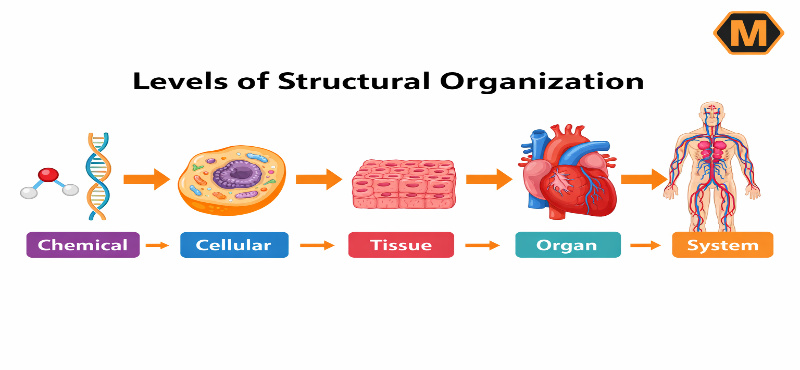
levels of structural organization in human anatomy from chemical to organ system diagram

Selecting a human anatomy research topic requires a balance between traditional morphology and modern clinical application. Below are prioritized clusters based on current US research trends:

Advanced Clinical Anatomy Research Topics

  • The Role of Anatomical Variations in Modern Surgical Outcomes: Focusing on the brachial plexus or hepatic artery.
  • Neuroanatomy of Chronic Pain: Mapping structural changes in the somatosensory cortex.
  • Surface Anatomy Accuracy: Evaluating the reliability of traditional landmarks in obese patient populations.

Integrated Anatomy and Physiology Research Topics

  • Mechanotransduction in Human Bone: How physical structure dictates mineral density.
  • Pathophysiological Structure Changes: Analyzing the remodeling of cardiac tissue post-myocardial infarction.

Anatomy Research Topics (Sample 100 Topics)

🧠 Basic Anatomy (Easy + Friendly)

  1. What is human anatomy and why is it important?
  2. What are the main parts of the human body?
  3. How does the skeleton support the body?
  4. What are the types of bones in the body?
  5. How do muscles help us move?
  6. What is the function of joints?
  7. How does the heart work in the body?
  8. What does the brain control in the body?
  9. How does the digestive system work?
  10. What is the role of the lungs?
  11. How does blood move in the body?
  12. What is the function of the liver?
  13. How do kidneys clean the blood?
  14. What is the role of the skin?
  15. How does the nervous system send signals?
  16. What are body tissues and types?
  17. What are organs and organ systems?
  18. How does the immune system protect us?
  19. What are hormones and what do they do?
  20. How does the body grow and develop?

🧬 Structure + Function 

  1. How does heart structure help it pump blood?
  2. Why is brain structure important for thinking?
  3. How do bones protect internal organs?
  4. How do lungs exchange oxygen?
  5. How does muscle structure help movement?
  6. Why are joints flexible in the body?
  7. How does kidney structure filter waste?
  8. How does the eye help us see?
  9. Why is skin layered?
  10. How does the ear help us hear?
  11. How does the stomach break down food?
  12. Why is the spine important?
  13. How do blood vessels carry oxygen?
  14. How does the pancreas help digestion?
  15. Why is the liver important for detox?

🧠 Neuroanatomy 

  1. What are the main parts of the brain?
  2. How does the brain control memory?
  3. What part of the brain controls emotions?
  4. How does the brain control movement?
  5. What is the role of the spinal cord?
  6. How do nerves send signals in the body?
  7. What is the function of neurons?
  8. How does the brain process pain?
  9. How does the brain control sleep?
  10. What happens to brain structure in stress?
  11. How does brain damage affect behavior?
  12. What is the role of the cerebellum?
  13. How does the brain help in learning?
  14. How does aging affect the brain?
  15. What happens in brain diseases like Alzheimer’s?

For those moving beyond general studies, exploring neuroscience research topics can offer higher academic impact.

🏥 Clinical Anatomy (Student-Focused)

  1. How do doctors use anatomy in surgery?
  2. What happens to bones during fractures?
  3. How does arthritis affect joints?
  4. What changes happen in the body during cancer?
  5. How does obesity change body structure?
  6. What happens to the heart in disease?
  7. How does stroke affect the brain?
  8. What happens to lungs in infections?
  9. How do injuries affect muscles?
  10. What happens to the spine in back pain?
  11. How does diabetes affect body organs?
  12. What happens in kidney disease?
  13. How does liver damage affect the body?
  14. What happens during organ failure?
  15. How does aging change body structure?

🤖 Modern + AI-Based Topics 

  1. How is AI used in studying human anatomy?
  2. What is 3D anatomy modeling?
  3. How do MRI scans show body structure?
  4. What is CT scan anatomy analysis?
  5. How does AI help doctors find diseases?
  6. What is virtual dissection?
  7. How does VR help students learn anatomy?
  8. What is 3D bioprinting of organs?
  9. How does technology improve anatomy research?
  10. What is digital anatomy learning?
  11. How does AI help in brain mapping?
  12. What is smart medical imaging?
  13. How does machine learning help anatomy studies?
  14. What is the future of anatomy with AI?
  15. How can robots help in surgery?

🧪 Microscopic Anatomy (Simplified)

  1. What are cells and tissues in the body?
  2. What is epithelial tissue?
  3. What is connective tissue?
  4. What is muscle tissue?
  5. What is nervous tissue?
  6. How do cells work in the body?
  7. What is blood made of?
  8. How do tissues form organs?
  9. What is bone tissue structure?
  10. What is skin made of?
  11. How do cells grow and divide?
  12. What is the structure of neurons?
  13. What is cartilage in the body?
  14. What is the structure of blood vessels?
  15. What happens at the microscopic level in disease?

🎓 Easy Topics for Assignments

  1. What is the human skeleton?
  2. What are the main organs in the body?
  3. How does the heart beat?
  4. What is the role of the brain?
  5. How do lungs help breathing?
  6. What is digestion?
  7. What are muscles made of?
  8. What are joints in the body?
  9. What is blood circulation?
  10. What is the role of kidneys?
  11. What is the function of skin?
  12. What is the role of hormones?
  13. What is the nervous system?
  14. What is immunity?
  15. What is body structure?

🟣 30+ Anatomy Research Questions (2026 Guide)

Choosing the right research question makes your work easy. Many students pick topics that are too big. This leads to confusion and weak answers. A smart way is to choose one clear and focused question. This helps you stay on track. It also makes your paper strong and easy to read.

🟢 Core Anatomy Questions

  1. What is human anatomy and why is it important?
  2. What are the main systems in the human body?
  3. How do body systems work together?
  4. What is the role of the skeleton in the body?
  5. How do muscles help the body move?
  6. What are joints and how do they work?
  7. What are organs and what do they do?
  8. How does the body keep balance and posture?
  9. What is the role of tissues in the body?
  10. How does the human body grow over time?

🧠 Brain and Nervous System Questions

  1. What are the main parts of the brain?
  2. How does the brain control body actions?
  3. What is the role of the spinal cord?
  4. How do nerves send signals in the body?
  5. How does the brain help us think and learn?
  6. What part of the brain controls memory?
  7. How does the brain process pain?

❤️ Heart and Blood System Questions

  1. How does the heart pump blood?
  2. What is the structure of the heart?
  3. How do blood vessels carry oxygen?
  4. What is the role of red blood cells?
  5. How does blood pressure affect the body?
  6. What happens to the heart during disease?

🫁 Respiratory and Digestive System Questions

  1. How do lungs help us breathe?
  2. What is the structure of the lungs?
  3. How does oxygen move in the body?
  4. How does the digestive system break food?
  5. What is the role of the stomach?
  6. How does the intestine absorb nutrients?

🦴 Bones, Muscles, and Movement Questions

  1. What are the types of bones in the body?
  2. How do bones grow and repair?
  3. What is the role of muscles in movement?
  4. How do joints allow movement?
  5. What happens to bones in fractures?
  6. How does aging affect bones and muscles?

Detailed account of dissection techniques or imaging used. Knowing how to write a lab report is essential here.

Need Professional Help?

Sometimes, academic work can feel like too much to handle. If you are stuck on a hard topic or a tight deadline, you do not have to do it alone. Getting expert advice can save you time and lower your stress. Professional writers can help you find the right sources and check your formatting.

Whether you need a better research plan or a final proofread, we are here for you. At MyAssignmentHelp.com, we provide top-quality support for students in the US and beyond. Our team knows how to meet high clinical standards and follow AMA rules. We can help you turn your rough notes into a polished dissertation. Reach out today to get the help you need for your anatomy project!

Final Thoughts on Your Anatomy Dissertation

Writing a dissertation on human anatomy is a big task. It requires a lot of time, focus, and clear thinking. You must move past simple facts. Instead, try to show how the body’s design helps it work. This connection between form and function is what makes your research stand out.

Success comes from picking a narrow topic. Do not try to explain the whole body. Focus on one small area or a specific medical problem. Use clear images and updated data to support your claims. 

Additionally, undergraduate students can benefit from exploring various biology presentation topics to build visualization skills. Stay organized and follow your outline closely. If you stay patient and work hard, you will create a project that helps the medical world. Good luck with your writing!

FAQ: Common Questions in Anatomical Research

Which topic is included in the study of anatomy?

Anatomy includes the study of systemic structure (skeletal, muscular, nervous), regional anatomy (head, neck, thorax), and clinical/applied anatomy.

What are some interesting anatomy articles to cite?

Focus on peer-reviewed journals such as The Journal of Anatomy or Clinical Anatomy, emphasizing recent breakthroughs in regenerative medicine and structural biology.

Where can I get anatomy assignment help?

For US students, professional academic writing services can provide guidance on structuring complex anatomy research paper topics and ensuring adherence to AMA/APA formatting standards.

What is the difference between anatomy and physiology?

Anatomy is the study of the physical structure and organization of the body. It focuses on what an organ looks like and where it is located. Physiology explains the biological function and mechanisms of those structures. While anatomy maps the body through tools like MRI or dissection, physiology explains how systems like homeostasis work to keep us alive. To succeed in research, you must connect a structural feature to its functional outcome.

How to structure a PhD anatomy dissertation?

A high-quality PhD anatomy dissertation follows a strict eight-part DNA to meet US academic standards. It begins with a Title Page and a 250-300 word Abstract. The Introduction defines the anatomical gap, followed by a Literature Review of peer-reviewed journals. The Methodology section acts as your shield by detailing specific tech like CT scans or cadaveric studies. Finally, the Results, Discussion, and Conclusion sections explain your raw data and its clinical impact on medical knowledge.

What are the latest trends in anatomy research 2026?

Anatomy research in 2026 focuses on digital tools and AI-driven imaging to improve medical accuracy. Top trends include 3D bioprinting of human organs and virtual dissection labs for students. Researchers are also using augmented reality (AR) and brain mapping technology to study complex systems. Other major shifts include the use of organ-on-chip technology and digital twin models of the human body. Adding these modern trends to your work makes it more valuable and updated.

What is the difference between gross and microscopic anatomy?

Gross anatomy studies body structures that can be seen with the naked eye, such as organs and muscles. Microscopic anatomy focuses on tiny structures like cells and tissues, which require a microscope to observe. In simple terms, gross anatomy is about visible structures, while microscopic anatomy explores what cannot be seen without tools.

How do I structure an anatomy dissertation for a PhD?

A PhD anatomy dissertation follows a clear structure: Title Page, Abstract, Introduction (research gap), Literature Review, Methodology (imaging or dissection methods), Results, Discussion (clinical relevance), and Conclusion. Keep each section focused and connect structure with function. Use proper formatting like AMA or APA to meet academic standards.

Thomas Taylor

I am a senior academic consultant with deep expertise in business, management, and MBA-level research. I specialize in dissertations, theses, and case studies, delivering strategic, well-structured, and academically rigorous content.

Related Post
Join our 150К of happy users

Get original papers written according to your instructions and save time for what matters most.

Order Now
Plagiarism checker
Verify originality of an essay
essay
Get ideas for your paper
Plagiarism checker
Cite sources with ease
WhatsApp Order/Chat on whatsapp
support
close