


 19 May,2026

Table of Contents
Schools, colleges, and universities now offer online learning options. Post-COVID-19 e-learning saw tremendous growth. Industry reports that flexible and convenient online courses have gained millions of students’ trust. Although online education has a lot of positive aspects, it also has some drawbacks that could hurt mental health. Academic responsibilities are a challenge for many students as they work, have families, and personal commitments. Learning via the internet differs from conventional learning. To complete an online course, students are required to have a high level of self-discipline, time management, and self-motivation.
Online learning is tiring and overwhelming for many students, particularly due to too much screen time, poor communication, and academic stress.
Knowing these main causes of stress is crucial to developing a healthier and more productive online learning environment. That is why MyAssignmentHelp brought this blog to help you identify these challenges of online classes and how to tackle them successfully.
Academic stress affects a student’s mental state, concentration, confidence, and academic performance. It is important to identify the sources of online learning stress so that students can understand what is negatively impacting their learning and how they can manage them effectively.
Students who can’t determine what is causing the stress slowly start experiencing anxiety, burnout and pressure. This can result in a lack of focus, decreased productivity, missed deadlines, exam anxiety, and emotional fatigue.
Understanding Causes of Stress offers a range of benefits, such as:
Example: Marina was a highly dedicated and motivated student. She was enrolled in online chemistry class and also working part-time in the evening to support her finances. Soon, she realized no matter how hard she tried she always ended up performing average.
Managing a job and studying all together was not only exhausting but also less productive. So she decided to fix her routine first by managing her time. She allotted a particular time for her job and study. Soon, she gained control over both of these tasks and improved her performance over time. A single change in her study routine fixed almost everything from missed classes to last-minute assignment submissions.
Similarly, if isolation or a lack of support is a problem, they can seek out advice and guidance from teachers, fellow students or counseling personnel.
Identifying and fixing the causes of stress in online learning contribute to improved academic support, mental well-being, and flexible learning environments
Early identification helps students:
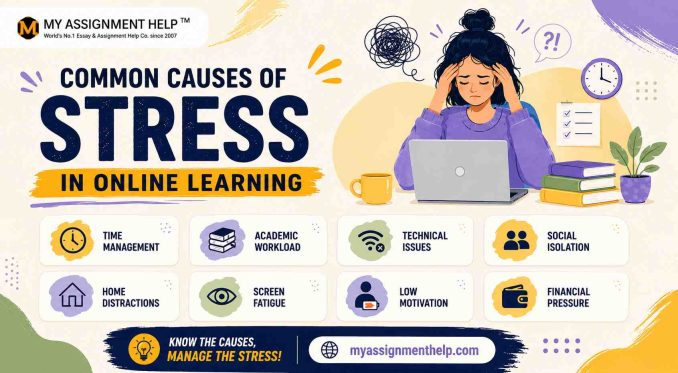
Although online learning is known for offering a flexible learning environment and convenience, it also comes with several challenges that can cause stress among students.
Below are some of the most common causes of stress in online learning
Due to the flexible learning environment, most students struggle to set their learning schedule effectively in online courses. Without a fixed classroom setting, some students start procrastinating while others struggle to manage their time which results in missed assignment deadlines, and skipped classes. Moreover, poor time management often leads to last-minute submission with low-quality work.
Online courses come with various tasks and activities which include quizzes, projects, discussions, presentations, and weekly assignments. However, managing all these tasks often feels overwhelming when there are overlapping deadlines and other commitments. This is the point where most of the students start wondering, who can do my online class for me? And refer to online class help sites for academic assistance.
Online learning is prone to technical issues, which include internet connectivity issues, login credential problems, device failure, and software glitches. Experiencing any of these issues while taking a live class or solving a quiz, may panic students and increase their stress levels.
E-learning comes with limited face-to-face interaction. In such scenarios, students may feel lonely and disconnected from the instructor and classmates, which can negatively impact their motivation and emotional well-being.
Some subjects and topics cannot be understood without face-to-face or classroom interaction. Since online learning comes with limited interaction opportunities, students may struggle to understand complicated concepts through recorded lectures and online notes alone.
Studying at home can be quite distracting as there is noise, family responsibilities, household interruptions, and many more. These things alone can distract and reduce the concentration of students. An environment full of distraction makes it harder for students to stay focused during online classes.
Sometimes delayed responses from instructors and unclear instruction can cause a lot of confusion and frustration. When such things happen, students start feeling isolated and unsupported.
Fear of failure is real. Almost every student has this doubt whether he is on the right track or not. Things become more complicated when there is no one to clear their doubts. Students often have worries and concerns regarding their grades, tests, and future careers. The ongoing academic stress often leaves them thinking, how can I pay someone to take my exam for me? Having such thoughts are not a sign of weakness, they show the level of stress and anxiety students experience in academics.
To succeed in online courses, students need to be highly dedicated and self-motivated. Those who struggle with discipline often procrastinate and avoid things till the last moment, which results in stress and guilt.
Spending a long study hour in front of a screen can lead to headaches, eye strain, fatigue, and reducd concentration. The continuous digital exposure not only affects mental health, but also negatively impacts your productivity.
Some students try to manage their finances by working part-time or full-time while taking online courses. However, managing both seems easy at the moment but in reality it’s exhausting and demands time management skills.
These are some causes of stress in academics which students deal with on a regular basis. Identifying these can help students strategize their learning and avoid them effortlessly.
Get academic guidance, study support, and expert assistance to better manage online chemistry classes, assignments, and deadlines.
Explore Chemistry Class HelpAcademic support for online learning, homework guidance, and study assistance.
To prevent stress in academics and make your academics highly productive, follow the given tips mentioned below
When you create a timetable it helps you effectively manage your workload and pressure.
Delaying academic tasks and doing things at the last moment doesn’t add any value to your learning; rather it increases anxiety and confusion.
To stay stress-free, students should:
Treat your health as a first priority. A healthy body supports a healthy mind and ensures academic success.
Don’t try to complete everything in one go. Continuous studying is neither practical nor productive. It can cause mental exhaustion and reduce focus.
Make proper notes and ask questions in online sessions to avoid any confusion.
Choose a quiet place for your study and avoid distractions as much as possible for better productivity.
Practice relaxation methods to ease and relax yourself. In this way, you can reduce your stress levels in stressful scenarios.
Don’t set an unrealistic goal for yourself. Having high expectations can lead to unnecessary stress.
If you feel your academics are unmanageable and overwhelming, don’t hesitate to seek academic assistance.
Encourage yourself with a positive mindset which keeps students motivated and emotionally stable.
By following these simple steps you won’t ever get stuck in your online course and be able to stay ahead of most of your competition.
| Factor | Do | Don’t |
|---|---|---|
| Time Management | Follow a daily study schedule and track your deadlines. | Avoid procrastinating or leaving tasks until the last minute. |
| Study Routine | Take regular breaks during study sessions. | Study continuously for long hours without rest. |
| Sleep Habits | Get enough sleep every night. | Stay awake late regularly to complete assignments. |
| Physical Health | Exercise regularly and eat healthy meals. | Ignore physical health and depend on junk food. |
| Screen Time | Limit unnecessary screen usage and rest your eyes. | Spend excessive hours on screens without breaks. |
| Communication | Ask teachers or classmates for help when confused. | Keep academic stress and doubts to yourself. |
| Mental Well-Being | Practice meditation, mindfulness, or relaxation techniques. | Overthink grades and compare yourself with others constantly. |
Online learning comes with flexibility and convenience, which makes it popular among students and working professionals. With so many advantages it also has some drawbacks which are related to academic pressure, poor time management, lack of motivation and fatigue. Students are required to identify and fix these stress factors in order to manage their studies effectively. To do so they need to follow healthy study habits, stay organized and motivated throughout the process and seek academic support when needed. With this approach students can effortlessly overcome challenges of online classes and successfully achieve academic excellence.
The common causes of stress in online learning include
Students can manage their academic stress by stratezising their learning and following proper study routine, which includes:
Online learning demands a high level of self motivation and dedication. Students who struggle to maintain these two qualities often find themselves struggling with their academics.
Too much screen time has the potential to negatively impact your eyesight. Also it can cause headaches, fatigue, and reduced concentration.
Early identification of the stress factors help students avoid burnout, improve focus, and maintain academic growth.

I am an experienced class-help specialist supporting students across all subjects. I assist with online classes, coursework, and exam preparation, delivering structured academic guidance, reliable subject coverage, and consistent support to help students succeed confidently.










 WhatsApp

