


 06 April,2026

Table of Contents
A 5-minute informative speech is a brief talk based on facts designed to educate an audience. A 5-minute informative speech is a short, factual presentation. It teaches a college audience about a specific subject. You must use clear points to fit the time limit.
Public speaking is a vital skill. Every college student needs it. You might feel nervous—that is okay; I have been there too. While you focus on mastering your delivery, you might occasionally feel overwhelmed and think, ‘I need someone to do my assignment‘ so I can practice. A short speech is a great start. It builds your confidence.
| Section | Time | Purpose |
|---|---|---|
| Introduction (Hook) | 30–45 sec | Grab attention with a fact or question |
| Main Point 1 | 60–70 sec | First key idea |
| Main Point 2 | 60–70 sec | Second key idea |
| Main Point 3 | 60–70 sec | Third key idea |
| Conclusion (CTA) | 30–45 sec | Summarize + closing impact |
If you find the preparation process overwhelming, you can buy assignment online to get a head start on your research. If you are in a rush you can just note down my key takeaways and breakdown points for better results.
Personal Opinion: I believe the secret to a great talk is brevity. Most students talk for too long. If you can explain a big idea in five minutes, you are a master. It shows you truly understand your subject. Focus on one clear message. That is the best way to leave a lasting mark. Using professional powerpoint presentation services can help ensure your visuals remain clean and impactful.
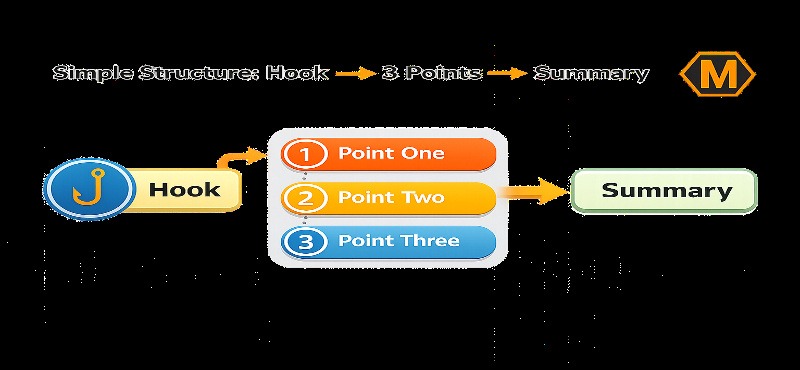
A 5-minute informative speech is a brief talk based on facts. Its goal is to educate rather than persuade. You must narrow your focus to cover the topic in 300 seconds.
In my view, students often try to say too much. They pick a huge topic like “The History of Art.” That is a mistake. Pick one small thing. Tell a great story about it. That is how you win. A 5-minute speech is a short talk.
You share facts with your audience. You do not try to change their minds. You just want to teach them. Choosing good informative speech topics also makes the process much easier. In my view, short talks are the hardest. You must be very clear. You have very little time. Every word must count.
Many college students find these hard. They worry about the time. They worry about the facts. Do not worry. A 5-minute speech is just a conversation. You are the expert. You are the guide. Your goal is to keep it simple. Use clear points. Use a strong opening. That is the secret to a great 5-minute informative speech.
Shrinking the scope is the ultimate secret weapon. When you narrow your focus, you don’t just save time; you actually unlock the ability to be engaging. And if you really want to keep an audience hooked for those brief 300 seconds, matching that narrow focus with funny topics is a brilliant shortcut. It’s much easier to be clear and conversational when you and your audience are sharing a laugh.
A 5-minute speech usually requires 650 to 750 words. This fits an average speaking speed of 130 words per minute. Timing is key. You do not want to go over. You do not want to be too short. Most people speak at a medium pace. This is usually 130 to 150 words per minute.
Structuring a shorter presentation requires intense sensory language, which is why reviewing a high-scoring descriptive speech example can help you see how to pack maximum imagery into a brief timeframe
So, how many words is a 5 minute speech?
For most, it is 650 to 750 words. If you speak fast, it is more. If you speak slow, it is less. Use the table below. It helps you plan your 5 minutes speech how many words count.
| Speaking Pace | Words Per Minute | Total for 5 Minutes |
|---|---|---|
| Slow Pace | 110 – 120 | 550 – 600 words |
| Average Pace | 130 – 150 | 650 – 750 words |
| Fast Pace | 160+ | 800+ words |
Pro Tips: Remember to breathe. Do not rush. Practice with a timer. This helps you find your pace. This is vital for 3 to 5 minute speeches. Do not waste time on a long intro; instead, use a speech writing service to craft a concise opening that grabs attention immediately.
2026 trends focus on AI, climate change, and space. These topics are popular and have plenty of new data for students.
2026 brings new ideas. The world is changing fast. You should talk about what is new. I think these are the most exciting areas. They are perfect for a 5-minute speech. I love these topics because they are “now.” Your professor is likely bored of old topics. Give them something new. Talk about the moon or new AI bots.
I suggest a good topic for a 5-minute morning speech, along with alternative topics like these. They are fresh. They get people talking. They are great interesting 5 minute presentation topics. To ensure your delivery is polished, consult a comprehensive essay writing guide to learn how to transition between ideas smoothly.
A high-impact 5-minute presentation needs a hook, three points, and a summary. Visual aids should be simple and easy to read from the back.
To win, you need more than words. You need a plan. First, know your audience. What do they want to learn? Second, have a clear structure. Every 5 minute speech topics for students needs an intro. It needs three main points. It needs a strong finish.
Third, use visual aids. A slide can say a lot. But do not overdo it. Keep your slides clean. I always say “less is more.” This is key for public speaking topics for students. It makes you look like a pro. These are the best topics for speech presentation success.
Pro Tips: Do not use too many slides. If you have ten slides, you are in trouble. Use three great images. Let your voice do the heavy lifting.
Here is the main list. These are great 5-minute informative speech topics for college. I have grouped them for you. You will find 5 minute presentation ideas here. This list covers 150+ topics for college students. They are grouped by subject to help you find your niche quickly. Scan this list for things you already know. If you love a topic, your speech will be better. Passion beats a perfect script every single time.
You can find more detailed scientific data by looking through environmental science research topics online.
If you are struggling to narrow down your focus, reviewing engaging topics for expository essay writing can provide inspiration for factual, focused subjects.
A speech is a vocal performance focusing on tone and body language. A presentation is a visual-aided talk using slides, props, or data charts.
A speech is mostly about the spoken word. You use your voice and body. You might not use any tools. A 5 minute presentation, however, uses visual aids. You might use slides or props. I think a speech is more impressive. If you can hold a room with just your voice, you are a star. But, for hard data, use a presentation. It helps people see what you mean.
In my view, presentations are often easier. The slides guide the audience. They also help you remember your points. But do not let the slides do the work. You are still the speaker. Use 5 minute presentation topics ideas that fit your style. This works for topics for a 5 minute presentation too. How to take notes that actually work. Learning how to write an outline is a fundamental part of this process.
Easy topics focus on daily life and personal skills. These require less research and more personal storytelling.
Sometimes you are in a rush. You need a topic fast. Here are easy 5 minute speech topics. These are easy topics to talk about for 5 minutes. You likely know these already.
These are easy 5 minute presentation topics. They do not need much research. They are fun 5 minute presentation topics for any class. If you are worried about the length, a word counter tool can help you stay within the perfect range.
Career-focused topics should highlight your problem-solving skills. Focus on results, teamwork, and industry trends to impress recruiters.
Are you applying for a job? Some firms ask for a talk. This is common in the US. You need 5-minute interview presentation topics. These show your skills. They show you can think fast. Recruiters want to see how you think. Do not just list facts. Tell them how you solved a hard problem. That shows you are ready to work.
These are 5-minute presentation topics for work. They help you land the job. Use them for 5-minute presentation topics for students heading to careers.
Look at “TED-Ed” or “Just a Minute” clips for examples. These show how to use a hook and a strong closing.
Look at 5 minute speech examples online. Watch TED talks. See how they use their time. A 5 minute informative speech examples often starts with a hook. Then it gives three facts. Then it ends with a call to action.
I like to use 3-5 minute speech examples for practice. They are short and sweet. You can find a just a minute topics list for quick drills. This builds your skill for 3 to 5 minute speech tasks. Use 5 minute speeches examples to find your voice.
To choose a topic, pick a narrow subject you love. Match it to your student audience. A 5-minute speech structure must have a hook, three main points, and a summary.
Personal Opinion: I think the structure is more important than the topic. You can talk about anything if your plan is clear. A simple plan makes you feel less nervous. It helps the audience follow your logic easily. For students interested in the ethics of the industry, looking into business ethics assignment help can provide deeper insights.
Avoid common mistakes by limiting your data and practicing out loud. Do not read from a script or ignore your time limit.
Step-by-Step Guide:
Personal Opinion: My biggest tip is to avoid the “reading trap.” Many students just read their notes. This makes the speech very boring. If you talk naturally, people will listen. It shows you know your stuff well. Students exploring this might also benefit from researching cyber security research topics to find the latest data. If you are concerned about the originality of your research, always check plagiarism before finalizing your notes to maintain academic integrity.
Writing a short speech can feel like a big task. You have to find the right facts. You must keep the word count perfect. This is where expert help makes a difference. If you feel stuck, reach out to pros. You can get custom guidance from MyAssignmentHelp.com to save time. They help students structure ideas and find trendy 2026 topics. This allows you to focus on your delivery. You can walk into class feeling ready and calm. Let experts handle the stress of the draft for you.
A 5-minute speech is a powerful tool for any college student. It teaches you to think fast and speak clearly. You have now seen over 150 topics for 2026. You have a plan for your structure. You know how to avoid common mistakes. These steps will make you a better speaker. Public speaking is a skill that grows with time. Do not be afraid to make a few mistakes at first. Every pro started as a beginner. If you need more academic examples, explore these psychology essay topics for inspiration.
Pick a topic that makes you feel excited. When you care about the facts, your audience will too. Use the timing tips to stay on track. Remember to keep your sentences simple. Look at your friends while you speak. Use your slides to show, not just tell. If you follow this guide, you will do great. Your 5-minute talk can spark a big idea in the room. This is your chance to share what you know. Take a deep breath and start writing your draft today. You have the tools you need for success. We believe in your ability to master the stage. Your next presentation will be your best one yet!
To choose a 5-minute speech topic, select a narrow subject you enjoy and research its relevance to college students. Narrowing your focus is key because it allows you to cover one specific idea in depth rather than skimming a broad subject. For 2026, look for topics involving new technology or social trends that offer fresh data. This ensures your talk is both informative and manageable within the strict 300-second time limit.
You should use small index cards with bullet points instead of reading a full paper script word-for-word. This method allows you to maintain eye contact with your audience and react to their signals. Reading from a script often results in a robotic tone that lowers engagement. Index cards serve as a safety net that keeps you on track without distracting from your verbal performance.
The best way to start a short speech is with a powerful “hook” such as a surprising fact, a bold question, or a brief story. This opening must capture the attention of the room within the first fifteen seconds of your talk. In a short format, you do not have time for a slow build-up. Starting with a hook establishes immediate interest and sets the tone for the rest of your presentation.
You should aim for three to five visual slides to ensure you do not spend too much time clicking through images. A good rule of thumb is one slide per minute to keep the focus on your spoken words. Slides should be visual and contain very little text to avoid distracting the audience from your message. This balance ensures your aids support your points without overwhelming the short time frame.
If you finish your speech early, you should invite the audience to ask questions or provide a deeper summary of your main points. This fills the remaining time while showing that you have a deep understanding of the subject. You can also have an extra “fun fact” ready in your notes just in case. Preparation for an early finish shows professionalism and helps you maintain your confidence until the timer ends.
To stop being nervous, practice your speech out loud multiple times and use deep breathing techniques before you begin. Nervousness often comes from a fear of the unknown, so knowing your material inside and out builds natural confidence. Focus on the value you are giving to your listeners rather than your own performance. This shift in mindset turns nervous energy into a passionate and engaging delivery style.
You should not memorize your entire speech word-for-word because it can lead to a robotic delivery and make you lose your place if you get distracted. Instead, memorize your opening and closing lines while knowing your main bullet points well enough to explain them naturally. This approach allows for a more conversational and authentic tone. If you forget a specific word, you can easily use another one without pausing.
A 5-minute speech is informative when it focuses on sharing neutral facts and teaching the audience something new without trying to persuade them. The goal is education, not changing minds or selling a specific point of view. You act as a neutral guide who simplifies complex data for your classmates. This clarity and factual basis are the core traits of a successful informative academic presentation.
A 5-minute speech typically requires 650 to 750 words for a speaker with a moderate talking pace. This word count ensures you can deliver your message clearly without rushing or finishing too early. To find your personal word count, record yourself speaking for one minute and multiply that total by five.
The most effective structure for a 5-minute speech is the “1-3-1” method: one compelling hook, three main supporting points, and one summary conclusion. Because time is limited, each main point should only last about 60 to 90 seconds. This simple framework keeps the audience engaged while ensuring you don’t exceed your time limit.
To stop being nervous before a speech, practice your material out loud at least five times and use controlled deep breathing to lower your heart rate. Shifting your focus from your own performance to the value you are providing your audience can also reduce anxiety. Preparation is the best cure for nerves; the more familiar you are with your opening line, the more confident you will feel.
A speech is considered informative when it focuses on sharing neutral facts and educating the audience rather than trying to change their opinions. In a college setting, this means acting as a neutral guide who simplifies complex data or trends for your peers. Unlike a persuasive speech, the goal of an informative talk is clarity and knowledge transfer.
Easy 5-minute speech topics for beginners focus on daily life and simple ideas that require less research. Good examples include how to save money as a student, the benefits of drinking water, how to make a simple meal, or why walking is good for health. These topics are easy because you already know them, which makes speaking more natural and confident.
The best way to structure a 5-minute informative speech is by using the 1-3-1 method. Start with one strong hook to grab attention. Then present three main points with clear explanations. End with one short summary that reinforces your message. This simple structure helps you stay within time and keeps your speech easy to follow.

I am an academic writing specialist focused on essays, assignments, grammar accuracy, and proper referencing. I ensure clarity, originality, and strict adherence to academic citation guidelines.










 WhatsApp

