Staring at a blank screen, wondering what on earth you’re going to talk about for your next biology assignment? I’ve been there. We’ve all felt the pressure of picking a topic that isn’t just another recycled lecture on the mitochondria. Whether you are prepping for a high school capstone or a university-level seminar, the secret to an “A” isn’t just hard work—it’s picking a topic that actually sparks curiosity. If you need dedicated support to excel, our biology assignment help is designed to guide you through complex research requirements.
In this 2026 guide, I’m going to help you navigate the sea of potential subjects. We’ll look at how to choose interesting biology topics for your presentation and provide you with a massive inventory of ideas to make your next class performance unforgettable. If you find the structure of a presentation daunting, our professional presentation services can assist in creating high-impact visuals.
What Are the Best Biology Presentation Topics?
When I think about “the best” biology presentation topics, I look for a specific intersection: scientific significance, current relevance, and storytelling potential. Biology isn’t just a list of facts; it is the study of life itself. The best presentations connect complex systems to the real world—how they affect human health, the environment, or the future of technology.
The Anatomy of a Winning Topic
Rather than tackling monolithic themes like “Genetics” or “Ecology,” focus on specific case studies that tell a story. Think of your topic as a character arc: introduce a biological problem, describe the conflict (such as a mutation, environmental shift, or resistance), and present the resolution—or the ongoing mystery—driven by modern research.
Principles for Selecting Your Topic:
Specify the Scope: Move from broad categories to targeted phenomena. Instead of “Antibiotic Resistance,” explore “The Role of Biofilms in Persistent Staph Infections.”
Identify the “So What?”: Connect the mechanism to humanity. Whether it is a breakthrough in personalized medicine, a shift in global biodiversity, or a bio-inspired engineering marvel, the relevance should be unmistakable.
Embrace Narrative: Treat your data as evidence in a story. A well-structured presentation explains how a discovery changes our understanding of life, moving beyond facts to illustrate the consequences of that knowledge.
By choosing a narrow, high-impact focus, you transform a lecture into an engaging, research-backed narrative that resonates with your audience.
Excel in your studies with expert biology assignment help.
Get personalized guidance and improve your grades today!
How to Choose Interesting Biology Topics for Your Presentation
Choosing a topic can feel overwhelming, but I follow a simple three-step process to narrow it down.
1. Identify Your Passion (The “Why”)
If you aren’t interested in your own slides, your audience won’t be either. For those balancing a heavy workload, taking an online biology class can often provide fresh inspiration. Ask yourself:
Do I care more about the microscopic (cell biology) or the macroscopic (ecology)?
Am I interested in the ethical dilemmas of modern science (bioethics)?
Do I want to focus on medical breakthroughs or environmental conservation?
2. Check for Academic Feasibility
Before you commit, check the databases. Do you have access to peer-reviewed journals? If a topic is too new, you might not have enough data to support your claims. If you’re struggling with gathering data, our lab report writing services can provide clarity.
3. Consult Your US Academic Standards
In the US academic landscape, professors look for more than just facts. They look for critical thinking. When finalizing your biology presentation ideas, ensure your topic allows you to:
Analyze data.
Discuss current research trends.
Present a balanced view of conflicting scientific theories.
Expert Tips for Aligning Topics with US Academic Standards
When I’m advising students on their coursework, I always emphasize that the delivery of the science is just as important as the science itself. Here is how you can ensure your presentation hits those high-level academic standards:
Evidence-Based Claims: Never rely on general knowledge. Use citations from reputable sources like Nature, Science, or PubMed.
Visual Engagement: Biology is visual. Don’t just use text-heavy slides. Use high-quality diagrams, videos of cellular processes, or interactive data visualizations.
The “So What?” Factor: Always end your sections by answering the question: “Why does this matter?” Whether it’s curing a disease or saving a forest, show your class the real-world utility of your research.
Comparative Analysis: Hot Trends in Life Sciences
In 2026, the life sciences are moving at breakneck speed. Comparing these areas can give you some excellent ideas for your presentation:
Field
2026 Trend
Potential Presentation Angle
Biotechnology
CRISPR 3.0 (More precise editing)
Ethics of human germline editing
Neuroscience
Brain-Computer Interfaces (BCI)
Can we “upload” memories?
Ecology
Rewilding and climate adaptation
Does reintroducing predators actually stabilize ecosystems?
Genetics
Epigenetic inheritance
How do our lifestyle choices affect our grandkids’ DNA?
Core Principles for an Outstanding Biology Assignment
To truly impress your class and elevate your presentation to a professional standard of scientific communication, consider integrating the lens of organizational behaviour. By analyzing how human systems, professional dynamics, and institutional structures influence the advancement or stagnation of your chosen field, you demonstrate a sophisticated, multidisciplinary perspective.
Define Your Scope Early: Start with a clear, concise definition of the biological phenomenon you are investigating. This sets the stage for the audience.
Highlight the Controversy: Science thrives on debate. If you are discussing stem cell research or climate change, don’t ignore the counterarguments. Address them, analyze the data behind them, and offer a synthesis.
Expert Consensus vs. Theory: Distinguish between what we know for sure and what is currently being tested. This shows your professor that you understand the scientific method, not just a textbook.
To get you started, I have curated these topics into categories. Whether you need biology topics to do a presentation on for an introductory course or an advanced seminar, these will give you a head start.
Molecular and Cellular Biology
Mechanisms of DNA replication fidelity, the role of telomeres in aging, and biochemistry assignment help for complex enzyme kinetics.
Mechanisms of DNA replication fidelity.
The role of telomeres in aging.
Epigenetic regulation of gene expression.
Protein folding and neurodegenerative diseases.
Mitochondrial dynamics and health.
CRISPR-Cas9: Beyond gene editing.
The dark matter of the genome: Non-coding RNA.
Autophagy: The cell’s self-cleaning process.
Signal transduction in cancer cells.
Genetics and Genomics
Pharmacogenomics: Personalized medicine.
The human microbiome project findings.
CRISPR-based disease therapy.
The ethics of germline editing.
Genome-wide association studies (GWAS).
Mitochondrial DNA inheritance.
Population genetics of human migration.
Synthetic biology and artificial genomes.
Epigenetic inheritance across generations.
Neuroscience and Behavioral Biology
Bioremediation: Cleaning oil spills with bacteria.
Lab-grown meat: The future of food.
CRISPR-engineered crops.
Nanomedicine in cancer targeting.
Bio-printing organs: Current status.
Renewable biofuels from algae.
Biosensors for environmental monitoring.
DNA data storage technology.
Optogenetics: Controlling neurons with light.
Genetic circuit design in synthetic cells.
Ecology and Environmental Biology
The sixth mass extinction: A review.
Climate change impact on coral reefs.
The evolution of antibiotic resistance.
Symbiosis in extreme environments.
Invasive species: Ecological disruption.
The evolution of human consciousness.
Keystone species and ecosystem stability.
Convergent evolution in mammals.
The role of viruses in host evolution.
Island biogeography theory in modern times.
Evolutionary Biology
The gut-brain axis.
Mechanisms of vaccine efficacy.
The rise of superbugs.
How bacteriophages combat bacteria.
The immune system’s role in aging (Inflammaging).
Prion diseases: Biology of misfolded proteins.
Autoimmune diseases: When the system turns against itself.
The biology of emerging zoonotic diseases.
CRISPR as an immune system in bacteria.
The role of commensal bacteria in human health.
Neuroscience & Human Physiology
Neuroplasticity in adult brains.
The biology of sleep and circadian rhythms.
Mechanisms of memory formation.
The blood-brain barrier: Challenges for drug delivery.
The endocrinology of stress.
Cardiovascular responses to high altitude.
The biology of addiction.
Neural interfaces and brain-computer interaction.
Pain pathways and signal modulation.
Botany & Plant Physiology
Struggling to decode complex plant structures or categorize diverse ecosystems? When your botany assignment help is handled by experts, you gain more than just a completed task—you gain clarity. Here are some botany-related topics that help to improve understanding.
How plants communicate via chemical signals.
CRISPR in agriculture: Increasing yield.
Phytoremediation: Plants clean soil.
The evolution of flowering plants.
Mechanisms of plant cold-hardiness.
Mycorrhizal networks: The “Wood Wide Web.”
Plant responses to herbivory.
Photosynthetic efficiency improvement.
The biology of carnivorous plants.
Circadian rhythms in plants.
Contemporary Issues & Ethics
The “Designer Baby” debate.
Bioethics in animal testing.
The impact of plastic on marine endocrine systems.
Biodiversity conservation in the Anthropocene.
Should we de-extinct species like the Mammoth?
Personalized nutrition based on DNA.
The biological reality of sex and gender.
The ethics of patenting human genes.
Biological weapons: Risks and defenses.
The future of human space exploration biology.
To further expand your options, here is a categorized list of more specialized, high-impact, and modern biology topics. These are designed to be research-friendly, allowing you to dive deeper into specific, current scientific debates and breakthroughs.
I. Advanced Biotechnology & Synthetic Biology
Focusing on the “engineering” side of life.
Xenotransplantation: The challenges of using genetically modified pig organs for human transplant.
Organoids: Using “mini-organs” grown in a lab to test drugs and model diseases.
DNA Data Storage: The potential of using synthetic DNA to store the world’s digital information.
Biological Circuits: Engineering bacteria to act as sensors or diagnostic tools.
De-extinction Ethics: The scientific feasibility and moral implications of reviving the Woolly Mammoth.
CAR-T Cell Therapy: How we are “reprogramming” immune cells to hunt and kill cancer.
Phage Therapy: Using viruses to kill antibiotic-resistant superbugs as an alternative to antibiotics.
II. Advanced Neuroscience & Psychology
Focusing on the connection between biology, cognition, and behavior.
8. Brain-Computer Interfaces (BCI): The biology of neural signal translation (e.g., Neuralink).
9. The “Hanger” Effect: The neuroendocrinology of how glucose levels impact emotional regulation.
10. Neuroplasticity in Adulthood: Can the adult brain truly “rewire” itself after major trauma?
11. Dopamine and Digital Addiction: The biological reward pathways reinforced by social media algorithms.
12. The Gut-Brain Axis: How the microbiome influences mood disorders like anxiety and depression.
13. Sleep and Memory Consolidation: The molecular mechanisms behind why we dream and store information.
III. Environmental & Evolutionary Biology
Focusing on survival, climate, and planetary health.
14. The Wood Wide Web: How fungal mycorrhizal networks facilitate communication between trees.
15. Epigenetic Adaptation: How species adapt to climate change faster than genetic mutation alone allows.
16. Phytoremediation: Using genetically enhanced plants to “suck up” heavy metals and toxins from contaminated soil.
17. Microplastic Bioaccumulation: The journey of microplastics from the ocean to human internal organs.
18. Urban Evolution: How species (like city pigeons or lizards) are physically changing to survive in concrete jungles.
19. The Sixth Mass Extinction: Distinguishing between natural background extinction and current human-driven rates.
IV. Human Health & Specialized Medicine
Focusing on the cutting edge of clinical biology.
20. Pharmacogenomics: Why the same drug affects two people differently based on their DNA.
21. The “Inflammaging” Theory: The link between chronic, low-grade inflammation and cellular ageing.
22. Mitochondrial Donation: The “three-parent baby” technology to prevent mitochondrial disease.
23. CRISPR for Hereditary Diseases: Current clinical trials for sickle cell anaemia and beyond.
24. Circadian Biology in Modern Life: The impact of artificial light on our biological clock and disease risk.
25. The Evolution of Viral Zoonosis: How viruses jump from animals to humans and what makes them pandemic-ready.
V. Ecology, Evolution & Environmental Health
Studying the biological impacts of the Anthropocene.
26. Urban Evolution: How concrete environments are forcing rapid, observable evolutionary shifts in city-dwelling species (e.g., physiological changes in urban lizards or birds).
27. The “One Health” Initiative: Exploring the biological link between human health, animal welfare, and environmental stability, specifically regarding zoonotic spillover.
28. Restoration Ecology: Using microbiome transplants to “re-wild” degraded soil or depleted coral reefs.
29. Biomimicry in Sustainability: How organisms (like lotus leaves or gecko feet) are inspiring new materials for water filtration and clean energy.
To help you navigate the vast field of biology, I have categorized these topics into major themes. Choosing a topic depends on your academic level and specific interests, but these themes cover everything from foundational cellular processes to cutting-edge biotechnological advancements.
Genetics, Genomics, and Biotechnology
Gene Editing: The mechanisms and ethics of CRISPR-Cas9.
Personalized Medicine: How genomics is revolutionizing drug discovery.
Synthetic Biology: Designing artificial cells and biological circuits.
Epigenetics: How environmental factors influence gene expression without altering DNA sequences.
Human Genome Project: Its long-term impacts on modern healthcare.
Genetic Engineering in Agriculture: The pros, cons, and safety of GMOs.
Bioinformatics: Using AI and big data to decode biological information.
Stem Cell Research: Advances in regenerative medicine and organ replacement.
DNA Profiling: The role of forensic biology in criminal investigations.
Xenotransplantation: The science and ethics of using animal organs for humans.
Cellular and Molecular Biology
Cell Signaling: How cells communicate to regulate growth and apoptosis.
Protein Folding: Understanding the impact of misfolding in neurodegenerative diseases.
The Cell Cycle: Regulatory checkpoints and the mechanisms of cancer development.
Mitochondrial Function: Beyond energy production—its role in aging and disease.
The Microbiome: The gut-brain axis and its impact on human health.
Enzyme Kinetics: How enzymes catalyze life’s essential biochemical reactions.
RNA Interference: Its potential in silencing disease-causing genes.
Bioprinting: The future of printing human tissues for transplants.
Climate Change & Biodiversity: The impact of rising temperatures on species distribution.
Ocean Acidification: Its devastating effects on coral reefs and calcifying organisms.
Keystone Species: How their removal leads to ecosystem collapse (e.g., wolves, sea otters).
Invasive Species: Mechanisms of how they disrupt local food webs.
Ecological Succession: How ecosystems recover after natural disasters (e.g., forest fires).
Phytoremediation: Using plants to extract pollutants from soil and water.
Microplastics: Their accumulation in the food chain and human health implications.
Rewilding: The effectiveness of restoring apex predators to fragmented habitats.
Human Physiology and Neuroscience
Neuroplasticity: How the brain rewires itself through learning and trauma.
The Biology of Stress: Long-term physiological and psychological effects of cortisol.
Neurodegenerative Diseases: The Pathology of Alzheimer’s and Parkinson’s.
Hormonal Regulation: How the endocrine system maintains homeostasis.
Sleep Science: The biological function of sleep in memory consolidation.
Immune System Overdrive: The mechanics of autoimmune diseases.
The Biology of Aging: Theories on why we age and how to slow it down.
Brain-Computer Interfaces: Current advancements in neuroprosthetics.
Evolution, Zoology, and Botany
Coevolution: Examining the fascinating arms race between predators and prey.
Sexual Selection: The evolutionary cost and benefit of extravagant traits (e.g., peacock tails).
Adaptive Radiation: How one species evolves into many to fill new niches (e.g., Darwin’s finches).
Plant Defenses: How plants use chemical warfare to deter herbivores.
Animal Communication: The complex languages of bees, whales, and primates.
Bioluminescence: The evolutionary advantages of light production in deep-sea creatures.
Evo-Devo (Evolutionary Developmental Biology): How small changes in embryonic development drive evolution.
Migration Patterns: The navigation mechanisms of birds and butterflies.
Human Physiology & Medicine
The immune system’s response to mRNA vaccines.
The physiology of high-altitude adaptation.
Organ transplantation: Progress in xenotransplantation.
The hormonal regulation of hunger and satiety.
The pathophysiology of Type 2 Diabetes.
Stem cell therapy: Current applications and limitations.
The bio-mechanics of human movement.
Autoimmune diseases: Why does the body attack itself?
The impact of microplastics on human organ systems.
Advancements in artificial organ development.
Microbiology & Virology
Viral evolution: Why do viruses mutate so quickly?
Bacteriophage therapy as an alternative to antibiotics.
The role of biofilms in persistent bacterial infections.
Extremophiles: Life in extreme environments.
The mechanics of zoonotic disease transmission.
Fungal pathogens: An emerging global health threat.
How nitrogen-fixing bacteria support agriculture.
The role of quorum sensing in bacterial communication.
The dark side of the virome: Viral-induced cancers.
Synthetic viral vectors in gene therapy.
Tips for a Standout Presentation
To make your presentation unique, don’t just report facts—tell a story or solve a problem.
The “Case Study” Approach: Instead of “What is CRISPR?”, try “How CRISPR could end Sickle Cell Anaemia by 2030.”
The “Debate” Approach: Present two sides of a controversial topic. For example, “The Ethical Dilemma of Germline Editing: Scientific Progress vs. Playing God.”
Use Visual Data: Biology is highly visual. Use animations of molecular processes or maps showing the spread of a disease rather than just text-heavy slides.
Connect to Current Events: If a new study was released this year (2026), mention it. It shows that your topic is relevant and current.
Biology Topics for College & Undergraduate Research
These topics require moderate research and often involve synthesizing information from multiple primary and secondary sources. They are excellent for deeper biology essays or comprehensive seminars. Expert tips can also be found in supporting resources, such as the Guide to Writing a Biology Lab Report, to help structure findings professionally.
Topics for Cell & Molecular Biology
Cell Structure & Function
Architecture and functional organization of eukaryotic cells
Membrane transport mechanisms (active transport, diffusion, endocytosis)
Cytoskeleton dynamics and motor proteins (kinesin, dynein, myosin)
Cell communication and signal transduction pathways
Protein trafficking and vesicular transport in cells
Cell cycle regulation and checkpoints
Molecular Genetics & Genomics
DNA replication fidelity and DNA repair mechanisms
Mechanism of transcription and transcriptional regulation
RNA processing and RNA interference (RNAi, siRNA, miRNA)
Mechanisms of translation and post-translational modification
Epigenetic regulation: DNA methylation & histone modification
CRISPR-Cas technology and genome editing applications
Human Genome Project and next-generation sequencing (NGS)
Molecular basis of cancer and oncogenes/tumor suppressor genes
Cell Physiology & Biochemistry
Mitochondrial biogenesis and cell energy metabolism
Apoptosis and programmed cell death pathways
Autophagy in cell survival and disease
Stem cell technology and cellular reprogramming (iPSCs)
Molecular basis of aging and cellular senescence
Molecular chaperones & protein folding diseases (Alzheimer’s, Parkinson’s)
Applied Cell & Molecular Biology
Techniques in cell culture & cell line development
Single-cell sequencing and its biomedical applications
Synthetic biology & bioengineering of artificial cells
Topics for General Biology & Health
Human Health & Disease
The biology of cancer: mechanisms of tumor formation and modern treatments
The human immune system: innate vs adaptive immunity
Antimicrobial resistance: a global health crisis in the making
The biology of viral infections & host-pathogen interactions
COVID-19 pandemic: lessons learned and future outbreak preparedness
Vaccines & immunization strategies: how vaccines work
Genetic disorders: causes, diagnosis, and gene therapy prospects
Neurodegenerative diseases such as Alzheimer’s & Parkinson’s
Obesity and metabolic syndrome: biological mechanisms and prevention
The science of allergies and autoimmune diseases
Human Biology & Physiology
The brain and nervous system: biology of memory and learning
Hormones & the endocrine system: how hormones regulate body functions
Digestive system physiology and gut microbiome
Cardiovascular system diseases: heart attacks, stroke, and prevention
Biological basis of sleep and circadian rhythms
Reproduction, Development & Genetics
Human reproductive biology and infertility treatments
Embryonic development and congenital abnormalities
Stem cells: types, sources, and therapeutic applications
Epigenetics: how environment influences gene expression
Environmental & Public Health Biology
Climate change and global health impacts
Environmental pollutants & respiratory health
Microplastics and their effects on the human body
Nutrition biology: role of macronutrients, micronutrients, and dietary science
Waterborne diseases and global sanitation challenges
Mental health biology: stress physiology and neurotransmitter imbalance
Advanced & PhD-Level Biology Topics
These are niche, highly specialized topics focusing on methodology, complex mechanisms, and current research frontiers—with a particular emphasis on managing business information technologies—best suited for advanced seminars or dissertation proposals. If help is needed with structuring a final submission, specialized assistance for Research Presentation Project Ideas is available.”
Molecular & Cellular Biology
CRISPR-Cas gene editing precision enhancement
Base editing vs prime editing efficiency and fidelity
Mechanisms of DNA repair pathways in cancer cells
Synthetic chromosome construction and stability
Cellular senescence and telomere regulation
Single-cell multi-omics integration methods
Protein folding misregulation in neurodegenerative disease
RNA modifications (epitranscriptomics) and gene control
Mitochondrial DNA mutation impacts on metabolism
Intrinsically disordered proteins in signal transduction
Autophagy regulation in immune cells
Mechanisms of programmed cell death beyond apoptosis
Spatial transcriptomics in tissue architecture
Stem cell fate determination and niche signalling
Cell cycle dysregulation and tumor suppression pathways
Genetics & Genomics
Chromatin remodelling and 3D genome architecture
Long non-coding RNAs in disease regulation
Polygenic risk scoring in personalized medicine
Evolutionary genomics of rapidly adapting species
Population genetics and ancient DNA reconstruction
Genome-wide association studies for rare disorders
Gene drive technology for invasive species control
Horizontal gene transfer in eukaryotic evolution
Epigenetic inheritance across generations
Computational models for predicting gene expression
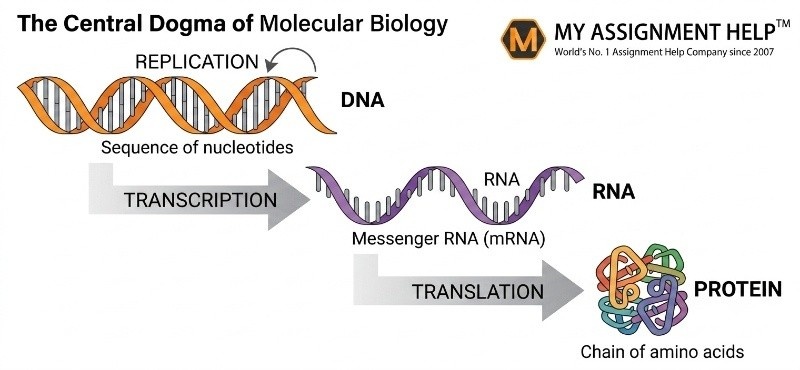
The Central Dogma is an exceptional presentation topic because it serves as the foundational “operating system” for all life. By centering your talk on this concept, you provide a clear, logical narrative that connects genetics, cellular function, and human disease. It allows you to bridge basic biology with advanced biotechnology, such as how mRNA vaccines work or how gene therapies correct mutations. Its clarity provides a structured framework that is easy for audiences to follow, yet it is complex enough to support deep dives into evolutionary biology, protein folding, and modern genomic research, ensuring a professional and high-impact presentation.
Molecular developmental biology and pattern formation
Molecular mechanisms of apoptosis
Evolutionary genetics and genome duplication
Ethics and biosecurity in genetic research
Human Biology & Health
Overview of human anatomy & physiology
Organization of the human body (cells → tissues → organs → systems)
Homeostasis and body regulation mechanisms
Structure and function of the skeletal system
Muscular system and biomechanics
Nervous system structure & neural communication
Central and peripheral nervous system functions
Human brain anatomy & cognition
Endocrine system and hormonal regulation
Cardiovascular system and heart physiology
Blood composition, blood groups, and clotting
Respiratory system structure and gas exchange
Digestive system and nutrient absorption
Metabolism & nutritional requirements
Urinary system and waste elimination
Immune system and defense mechanisms
Lymphatic system & immunity
Reproductive system anatomy and physiology
Human development, growth & aging
Genetics of human traits and disease susceptibility
Hereditary disorders and genetic screening
Human microbiome & health interactions
Human sensory systems and perception
The integumentary system (skin, hair, nails)
Exercise physiology and fitness
Human respiration in high altitude & extreme environments
Nutrition science and diet-related diseases
Metabolic disorders (diabetes, obesity, etc.)
Infectious diseases & pathogen biology
Vaccination & herd immunity
Chronic diseases and lifestyle risk factors
Cancer biology and prevention
Mental health and neurobiology of disorders
Stress physiology and coping mechanisms
Cardiovascular diseases & prevention
Sleep science and circadian rhythms
Pain physiology and management
Public health principles and epidemiology
Environmental health and climate impacts
Pharmacology and drug action in the body
Substance abuse and addiction biology
Human reproduction technologies (IVF, ART)
Maternal & child health
Health literacy and community medicine
Hospital systems and healthcare delivery
Telemedicine and health technology
Global health challenges & pandemic preparedness
Bioethics and patient rights
Health policy & healthcare economics
Future of medicine (AI, precision medicine, regenerative medicine)
Environmental & Ecological Biology
Perfect for environmental sciences, including botany topics for presentations. For more specialized ideas, see the dedicated list of Environmental Biology Presentation Topics.
Introduction to ecology and levels of ecological organization
Future challenges and innovations in environmental biology
Evolutionary & Classification Topics
These topics cover the history of life and its organization on Earth, making them perfect for zoology presentations.
Evolutionary Biology
Phrasing Style (Questions):
How does stabilizing selection contribute to maintaining a constant phenotype in a population over time?
What evidence supports the Endosymbiotic Theory of mitochondrial evolution?
How does sexual selection influence genetic diversity in mammalian populations?
Example Topics:
The role of natural selection in the evolution of camouflage in animals.
The relationship between genetic drift and the development of isolated populations.
Analyzing the molecular evidence for the evolution of complex organ systems in vertebrates.
Taxonomy & Classification
Phrasing Style (Statements):
The challenges and implications of defining species in microbial life.
The role of molecular clocks in determining evolutionary divergence times.
How newly discovered deep-sea invertebrates challenge current classification systems.
Example Topics:
The significance of genetic sequencing in the classification of new species.
The use of phylogenetic trees in understanding evolutionary relationships among species.
A comparative analysis of traditional and molecular methods in the classification of plants.
Final Thoughts: Crafting Your Narrative
When you finally step up to the podium—or turn on your camera—remember that you are the expert on your chosen topic. You have done the research, you have organized the data, and you have a unique perspective.
The best biology presentations are the ones that take the audience on a journey. Don’t just lecture at them; invite them into the world of biology. Show them how the molecules inside their own bodies, the ecosystems they inhabit, and the genetic history they carry are all interconnected.
If you use these biology presentation ideas as a starting point and stay true to your curiosity, you won’t just pass your assignment—you’ll inspire your classmates. Good luck, and happy researching!
If you require general academic guidance, our comprehensive essay writing guide is an excellent resource for any student. Finally, if you need any further assistance with your studies, don’t hesitate to reach out for homework help.
If you use these biology presentation ideas as a starting point and stay true to your inherent curiosity, you won’t just pass your assignment—you will genuinely inspire your peers and professor. However, navigating the intersection of rigorous scientific evidence and engaging delivery can be challenging.
If you find yourself overwhelmed by dense research requirements, needing support with a complex case analysis, or requiring help structuring your presentation, MyAssignmentHelp provides expert assistance. From refining your core arguments to ensuring your data visualization meets university standards, our team is dedicated to helping you translate your hard work into a high-impact presentation.
Frequently Asked Questions (FAQ)
What is the most impressive topic for a biology presentation?
The most impressive topics are those that bridge two fields. For example, combining Neuroscience and Ethics, or Genetics and Climate Change. It shows you can synthesize complex information.
How do I make my biology presentation ideas more “engaging”?
Use storytelling. Don’t just list facts about a protein; describe it as the “messenger that tells the cell when to divide.” Use analogies to explain complex cellular processes.
Should I focus on new research or classic theories?
A great presentation usually does both. Use a classic theory as your foundation, then show how new research in 2026 is either confirming or challenging that theory. This provides a complete picture for your class.
How much data should I include?
Don’t overwhelm your audience. Focus on one or two key data points per slide. If you have complex charts, explain the X and Y axes clearly before discussing the trend line.
I am a literature and humanities specialist with experience in academic essays and theory-based assignments. I deliver insightful, well-structured content grounded in strong academic interpretation.


 22 June,2026












 WhatsApp

