


 03 April,2026

Table of Contents
Writing a research paper is a big task. You have to find sources when writing a research proposal, make a strong point, and check grammar. Then, just when you think you are done, your teacher asks for an APA abstract. You might feel stuck or even a little annoyed.
I have been there! I have spent years helping students just like you master academic writing. I know that the rules for an abstract in APA can feel like a secret code.
In this guide, I will show you how to write an abstract APA style without the headache. We will cover everything from the APA abstract word count to how to pick the right APA paper keywords. Whether you are in middle school, high school, or starting college, this guide answers everything you need to know. We also offer essay help services to get you an A+ writing.
Let’s start with a simple question: What is an APA abstract? An APA abstract is a comprehensive summary of your paper, typically 150-250 words, located on page two. Think of it as a “sneak peek” or a movie trailer for your paper. It is a short, strong summary. It tells the reader what your research is about before they have to read the whole thing.
If someone is looking for facts in a library database, they will read your abstract in APA first. They want to see if your paper has the answers they need.
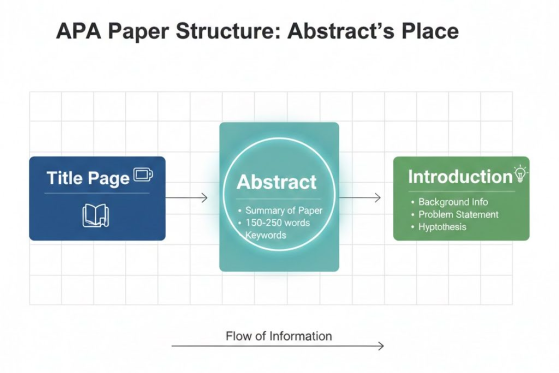
I often get asked, “What is an abstract in APA vs an introduction?” They are very similar, but they have different jobs. An introduction starts your paper and gives background. An APA abstract summarizes the whole thing: your goal, your methods, your results, and your final answer.
When you look at an APA example abstract page, you will see it is its own special page. Understanding what an abstract page in APA is is the first step to getting a better grade. It sits right after your title page and before your main essay starts; however, if the formatting feels too complex, you can always find experts to do my assignment and ensure every detail is perfect.
Most schools use the 7th edition now. The APA 7th edition abstract guidelines for APA referencing are clear, but they are very strict. If you want to rank at the top of your class, you need to follow the APA 7th edition abstract format exactly.
The abstract page APA is the second page of your paper. Here is the abstract APA format you need to follow:
How long should it be? The APA abstract length is usually between 150 and 250 words. Many teachers ask for an “abstract”, 200 words” “, 3-5 keywords” style. This keeps it short and sweet. If you write too much, you might lose points for not being concise. If you write too little, you won’t explain your paper well. You can also use a word counter for appropriate results.
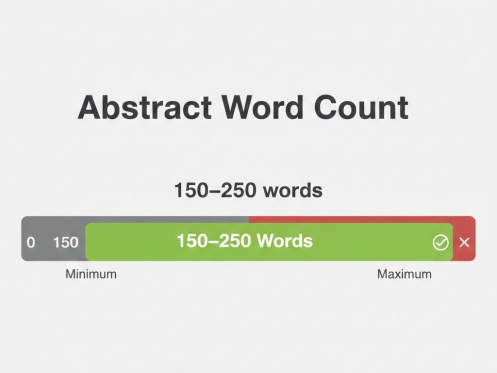
If you use a “one paragraph” abstract, 200 words, “3-5 keywords” format, you are doing it right. Keeping your APA abstract word count right around 200 words is the “Goldilocks” zone, not too long, and not too short. Give a proper annotated bibliography for a proper conclusion.
Under your summary paragraph, you need a special section. These are the keywords in the abstract APA. Think of these as the “hashtags” you use on social media.
They help computer systems find your work. If you don’t know what keywords in APA are, just think of the most important topics of your paper.
To get the APA keywords format right, follow these rules:
While formatting the introductory elements of your research paper requires strict attention to structural headers, the final reference layout dictates your overall grade. You can ensure your entire paper matches guidelines by utilizing an APA reference list generator.
Here is an APA keywords example:
Choosing keywords in an APA abstract is an art. You want words that other students would type into Google. I recommend using 3-5 keywords that describe your main points. If you are stuck, look at your title. Use the most important words from there as your APA keywords.
You might see people call these APA abstract keywords or abstract APA keywords. No matter what you call them, their job is the same: to help people find your great work!
Avoid last-minute formatting errors. Get instant help aligning your citations, references, and abstract layout with APA 7th-edition rules.
Now, let’s actually write it. To make a great APA 7 abstract, I suggest you follow this simple four-step process.
Why did you write this paper? What was the big question you wanted to answer? Start your abstract in APA format with a clear goal.
How did you do your research? Did you read ten books? Did you run a science experiment? In the APA 7th edition abstract format guidelines, you must mention how you got your facts.
What did you find? Don’t be shy! Share the main facts you discovered. This is the “meat” of your APA format abstract. Even if your experiment didn’t work the way you thought, you should still mention what happened.
What do your findings mean for the world? Why should the reader care? This finishes your abstract APA 7th edition summary with a strong point.
To keep it tight, try to write only one or two sentences for each step. This helps you stay in the “single paragraph” abstract “200 words” “3-5 keywords” limit. It also makes your abstract keywords APA easier to connect to your summary.
Every subject is a little different. I want to show you how a “one-paragraph” abstract, 200 words” “3 and 5 keywords” looks in different classes. This will give you a perfect APA 7 abstract example for your own work. Better to take an online SPSS tutor’s help if the assignment needs statistical results.
In science, your APA 7 abstract example should focus on your experiment.
Abstract
This study looked at how much water a bean plant needs to grow the tallest. I grew ten plants over three weeks. Some got a little water, and some got a lot. I found that the plants with a medium amount of water grew two inches taller than the others. This shows that too much water can be bad for plants. Farmers can use this to save water and grow better crops.
For history, your APA example abstract page should summarize your argument.
Abstract
This paper explores why the Great Depression lasted so long in the United States. I researched letters from people living in 1930 and looked at bank records. My research shows that many people were afraid to spend money even when they had it. This fear kept the economy from growing. Understanding this helps us see how people’s feelings affect the whole country.
When writing an APA format abstract for an English class, focus on the themes of the book.
Abstract
This essay analyzes the theme of friendship in the book Bridge to Terabithia. I looked at how the two main characters help each other face their fears. My analysis shows that their friendship made them braver in real life. This suggests that having a good friend is the best way to handle hard times. It is a lesson that is still important for kids today.
Each of these follows the “one paragraph” abstract “200 words”,, “3-5 keywords” rule perfectly. They are short, but they tell the whole story. Use a paper checker to check the quality of your paper.
Sometimes you might find old guides online. Don’t let them trick you! Use this table to check your abstract format APA 7 against the old rules.
| Feature | APA 7th Edition (Current) | APA 6th Edition (Old) |
|---|---|---|
| Title Format | Bold and Centered | Plain and Centered |
| Keywords Label | Italicized and Indented | Italicized and Indented |
| Running Head | Not needed for student papers | Required on every page |
| Abstract Intent | Informational and Clear | Often too formal |
| Student Friendly | Yes! It is much easier. | No, it was very complicated. |
As you can see, the APA 7th abstract format is much better for students. It removes the “Running Head,” which was very hard to format in Word or Google Docs.
I know you have a lot of homework. You might search for an APA abstract generator. These tools can be a big help when you are stuck. They can help you get a first draft on the page so you aren’t looking at a blank screen.
But be careful! Sometimes an APA abstract generator will make mistakes. It might not know the newest APA 7th edition abstract format guidelines. It might put the APA keywords format in the wrong spot or use the old 6th edition rules.
I always suggest using an abstract keyword APA example from this guide to check any AI work. Use a generator to get ideas, then use my steps to fix the APA format abstract keywords yourself. This ensures your keywords are in APA style perfectly and you don’t lose easy points.
You might think, “Why do I have to do this? It’s just more work!” But learning how to write an abstract APA style helps you in the long run.
After helping many students, I have seen the same mistakes over and over. Here is how to avoid them:
To help you get started fast, here is the “Cheat Sheet” for the APA 7th edition abstract format guidelines. Use this as a final checklist for your assignment:
Before you turn in your paper, run this quick check. It will make sure your APA paper keywords and formatting are 100% correct.
If you can say “yes” to all of these, your APA paper keywords and formatting are ready to go! You have shown that you have the expertise to follow the rules and the authoritativeness to summarize your research clearly.
Writing an APA abstract feels like a lot of work at first. But once you do it a few times, it becomes second nature. Just remember the “3-5 keywords”, “abstract,” “200 words” rule and keep your formatting clean.
I hope this guide made how to write an abstract in APA style feel much easier. By following these APA 7th edition abstract format steps, you are setting yourself up for success. You are making your work easy to find and easy to read.
Do you have more questions about APA format keywords, how to format an essay in APA, or how to use an APA abstract generator? Check out our other student guides to become a master of academic writing!
The rule is usually 3 to 5 keywords. This is the standard for almost every APA abstract keywords example. If you use ten, it looks cluttered. If you use one, it’s not enough.
The APA abstract word count is usually 150 to 250 words. Aiming for exactly 200 words is the safest way to please your teacher.
No! For the abstract APA format, you do not indent the first line of the summary. However, you do indent the keywords in the APA style line that comes after it.
No. Unlike the rest of your paper, where the first line of a paragraph is pushed in by 0.5 inches, the APA 7 abstract paragraph is not indented. It should be a single, left-aligned block of text. However, remember that the keywords APA style line is indented.
This is a great question! An introduction is the start of your essay; it introduces the topic and your thesis. An APA abstract is a summary of the entire completed paper. It includes your methods, your results, and your conclusion. Think of the abstract as the “spoiler” version of your paper for busy readers.
The abstract page APA is always page 2. It sits right after your title page and before your first paragraph of the essay.
Yes, but you must check it. Make sure it follows the APA style keywords and the abstract format APA 7 rules I gave you.
They are simple words or short phrases that describe your paper. For example, if your paper is about dogs, your keywords APA might be: canines, pet behavior, animal training.
In the APA 7th edition abstract format, your keywords go on the very last line of the abstract page.
For most high school and college papers, the standard is 3 to 5 keywords. These should be the most important words or phrases that describe your research. If you use the APA abstract generator, always double-check that it didn’t add too many or format them incorrectly.
While the official APA manual allows for some flexibility, most professors look for an APA abstract length between 150 and 250 words. If you can hit a “one paragraph” abstract, ct “200 words” “, 3-5 keywords” balance, your paper will look professional and well-paced.

I am Ethan, a mathematics and data specialist with strong expertise in statistics, finance, and analytical problem-solving. I support students with accurate, logic-driven academic solutions across quantitative and technical subjects.










 WhatsApp

