


 18 December,2025

Table of Contents
Writing a strong essay is not just about good ideas. It is about how clearly those ideas are organized. Even a well-researched essay can fail if the structure is weak or confusing.This guide explains how to structure an essay in a simple, practical way. You will learn the basic essay framework, paragraph structure, common organizational patterns, and real examples you can follow for any academic assignment. If you find the process overwhelming, seeking structured essay writing help can ensure your paper is handled by experts and follows a clear, logical framework.
By the end, you will know exactly how to plan, write, and organize an essay that is easy to read and easy to grade.
Essay structure refers to how your ideas are arranged so that readers can follow your argument without confusion. It acts like a roadmap that guides the reader from the introduction to the conclusion.
A clear structure helps you:
No matter the subject or essay type, structure is what holds everything together. If you are just starting out, referring to a comprehensive essay writing guide can help you understand the broader writing process..
Almost every academic essay follows the same three-part framework:
Each section has a specific role and should work together smoothly.
The introduction prepares the reader for what follows. It should be clear, focused, and engaging.
A strong introduction includes:
The thesis usually appears as the last sentence of the introduction.
The body is the main part of your essay. This is where you explain, analyze, and support your ideas.
Each body paragraph should focus on one main point only.When using external sources to back your claims, you must know how to quote in an essay properly to maintain academic integrity.
Keeping this structure makes your essay easy to follow and logically connected.
The conclusion brings your essay to a clear and satisfying close.
A good conclusion should:
Avoid adding new ideas or evidence here. The goal is to wrap up, not expand.see our guide on how to finish an essay effectively.
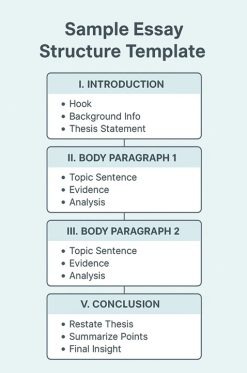
Different essays require different ways of organizing ideas. Below are the most commonly used structures.
Chronological Structure
This structure presents events or steps in time order.
Best for:
Example: Describing the stages of a scientific experiment.
Cause and Effect Structure
This pattern explains why something happens and what results from it.
Best for:
Example: How social media use affects student focus.
Compare and Contrast Structure
Used to show similarities and differences between two subjects.You can explore various comparative essay topics to see this in action.
Two common methods:
Best for:
Problem–Solution Structure
This structure identifies a problem and proposes solutions.
Best for:
Example: Reducing food waste in schools.
Even with a solid essay outline, weak paragraphs can damage clarity.
To maintain paragraph unity:
This structure keeps your writing focused and persuasive.
Formatting and Academic Structure
Structure is not just about ideas—it also affects how your essay looks.
Different academic styles influence structure.If you are struggling to meet strict university requirements, a reliable academic writing service can help you format your work correctly.
Common styles include:
Formatting affects:
Following the correct format improves professionalism and prevents plagiarism.
Many essays lose marks due to structural problems.One of the best ways to stay on track is to create a detailed essay outline before you begin writing
Avoid these mistakes:
Planning your structure before writing helps prevent these issues.
Essay Structure Checklist
Before submitting your essay, check the following:
check out our tutorial on how to write a 5-paragraph essay.
Introduction
Body Paragraph 1
Body Paragraph 2
Body Paragraph 3
Conclusion
This structure works well for short argumentative essays.
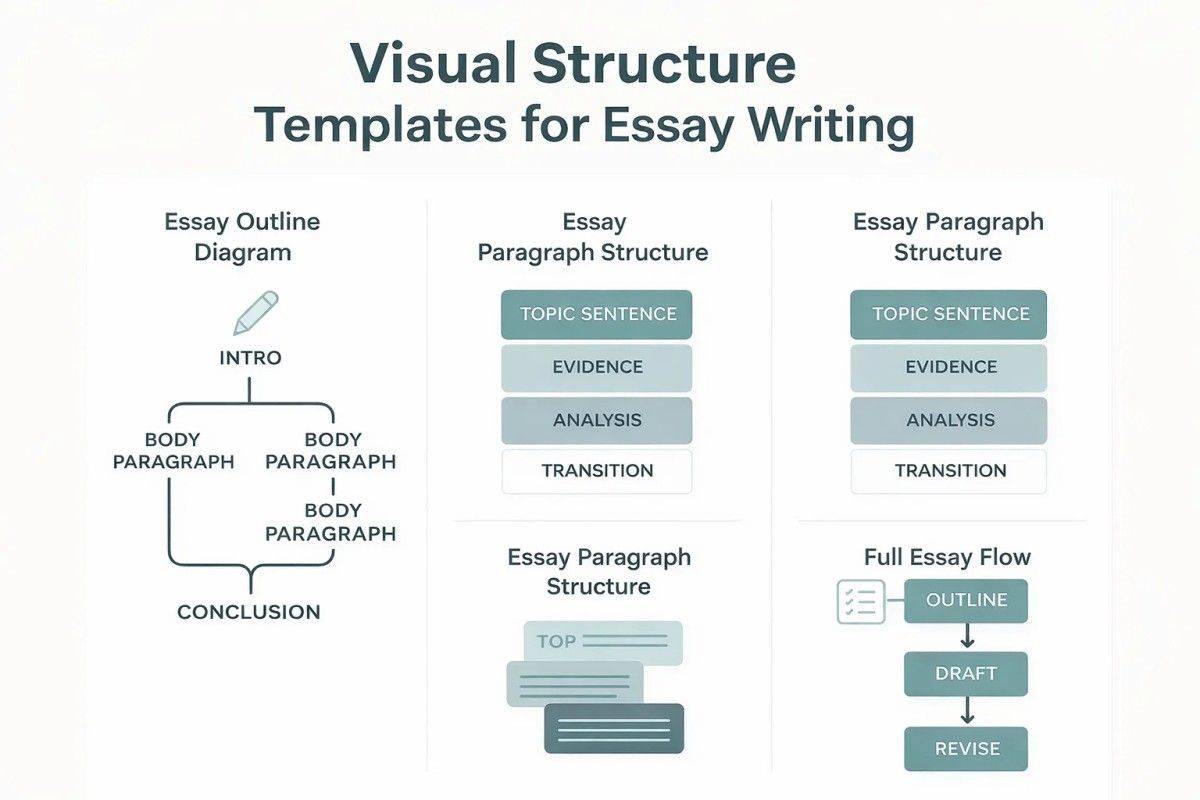
A well-structured essay is easier to write, easier to read, and easier to grade. Clear organization strengthens your argument and helps your ideas stand out.
To succeed:
Once you master essay structure, every assignment becomes more manageable.
Ans-Essay structure refers to the organized way ideas are arranged in an essay, typically including an introduction, body paragraphs, and a conclusion. This structure helps maintain clarity, logical flow, and academic coherence.
Ans-An essay generally consists of three main parts: an introduction that presents the topic and thesis, body paragraphs that develop ideas with evidence, and a conclusion that summarizes the discussion and reinforces the main argument.
Ans-To structure an academic essay, start with a clear introduction and thesis, follow with well-organized body paragraphs (one idea per paragraph), and end with a concise conclusion. Using an outline before writing improves organization and flow.
Ans-The standard essay format usually includes 12-point font (Times New Roman), double spacing, one-inch margins, and properly indented paragraphs. This format applies to most academic essay types unless otherwise specified.
Ans-Yes, an essay can be written in four paragraphs, especially for short assignments. A common four-paragraph structure includes one introduction, two body paragraphs, and one conclusion.
Ans-A conclusion paragraph should restate the thesis in new words, summarize the key points discussed in the body, and provide a final insight or implication without introducing new information.
Ans-In traditional academic essays, headings are generally not used unless required by the instructor. However, essays written in report format or long academic papers may include headings if permitted.
Ans-Different types of essay formats include argumentative, descriptive, expository, and narrative formats. Each type follows the same basic essay structure but differs in how body paragraphs are organized and developed.
Ans-To improve flow, use clear topic sentences, logical transitions, and consistent paragraph structure. Reviewing your essay outline and revising for coherence also helps strengthen overall structure.
Ans-If your essay lacks structure, revisit the outline, ensure each paragraph focuses on one idea, and check transitions between sections. Seeking guidance from an essay writing tutor or using essay assignment help can also improve organization.

I am a student-focused academic writer who supports learners with essays, homework, and study skills. My approach emphasizes clarity, confidence-building, and practical academic improvement.










 WhatsApp

